Service Area
Oil Conversions and Ducted Heat Pumps in West Seattle, WA
Last Updated
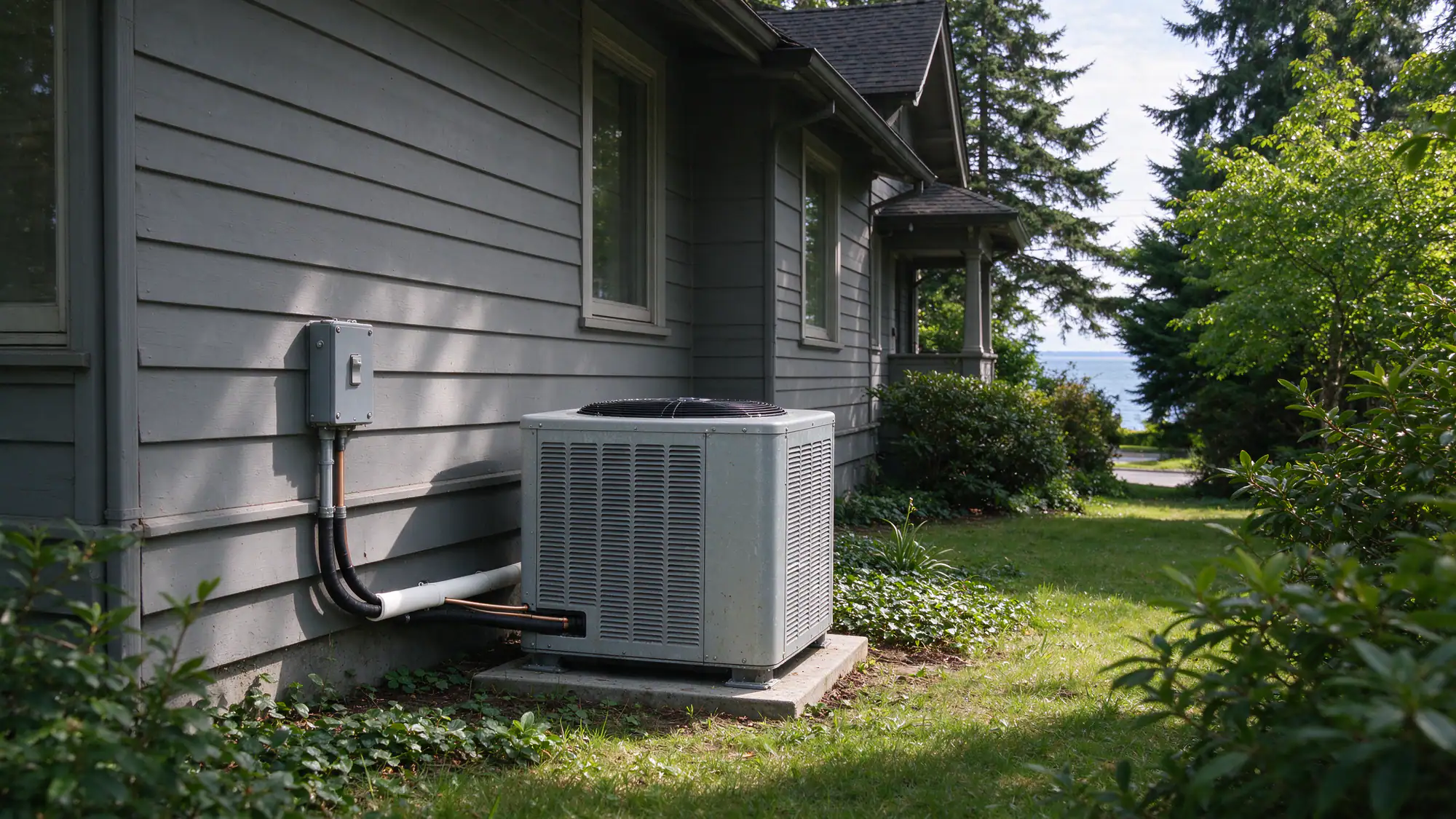
West Seattle has more oil-heated homes than any other part of Seattle, so heat pump work here is usually an oil conversion: the oil furnace comes out, a ducted heat pump goes in on the existing ducts, and the tank is decommissioned under a fire permit. The Seattle Heat Pump Company plans and manages these projects from North Admiral and Alki to Gatewood, Fauntleroy and Arbor Heights, and licensed and insured contractors carry out the installation.
Census estimates put about 1,421 West Seattle households on heating oil, roughly 5.2% of homes. City of Seattle open data shows the district filed 2,274 single-family heat pump trade permits over the latest three years of records, second only to Northeast Seattle, and 639 of those named ducted equipment. North Admiral alone accounted for 552.
Where West Seattle’s oil homes come from
A quarter of West Seattle’s homes were built before 1940 and nearly half before 1960, by Census counts. Houses of that era were commonly heated by oil furnaces fed from a buried or basement tank, and many still are. The city estimates that roughly 7,000 to 10,000 oil-heated homes remain across Seattle, down from about 18,000 in 2018, with a goal of none by 2030. West Seattle holds a larger share of that remaining pool than any other district.
That history shapes the job in two ways. First, an oil furnace already moves heat through ducts, so the house usually has a supply and return system a heat pump can use. Second, the tank is a regulatory item with its own permit, timeline and possible surprises. Treating the conversion and the tank as one plan avoids a winter gap in heat and keeps the rebate paperwork straight.
Converting from oil: the order of operations
Ducts and sizing first
The new system is sized from a room-by-room load calculation for Seattle’s 24°F design day, not from the oil furnace’s nameplate. Oil furnaces installed decades ago were often oversized, and many West Seattle houses have since added insulation or replaced windows. Then the ducts get a static pressure test. A heat pump delivers air at a lower temperature than an oil burner, so it needs more airflow to carry the same heat, and undersized returns are the usual bottleneck. Our page on running a heat pump on existing ductwork explains how that test reads.
Equipment and the Clean Heat rebate
An electric air handler or a heat pump coil replaces the furnace, a new outdoor unit goes on a pad, and the controls are set so electric backup heat stays off above 40°F, as Seattle’s energy code requires. The Seattle Clean Heat program takes $2,000 off a qualifying Mitsubishi Electric heat pump installed by a participating contractor in an oil-heated Seattle home, with an extra $4,000 for households between 81% and 150% of area median income on installs completed within the program’s current funding period. Income-eligible households below that range can apply to the Office of Housing’s HomeWise program for a no-cost conversion. Program rules change, so the Seattle heat pump rebate guide carries the current terms.
The tank, last
With the heat pump running, the tank is pumped, cleaned and either filled in place or removed by an ICC-certified decommissioner under Seattle Fire Department permit, and a decommissioning report goes to the fire department within 30 days. Filling a clean tank in place typically costs about $700 to $3,000 plus the $184 permit. Seattle’s fire code does not require soil sampling, but the fire department says a tank suspected of leaking should be removed rather than abandoned. Oil tank decommissioning covers both methods and when removal makes more sense.
Salt air on Alki, Fauntleroy and Seaview
West Seattle’s shoreline runs from Duwamish Head around Alki Point and south past Lincoln Park to the Fauntleroy ferry dock. Houses on that edge, and on the bluffs above it in Seaview and Fauntleroy, sit in onshore wind that carries salt.
Salt matters because an outdoor coil is a large area of thin aluminum fins pressed onto copper tubing. Airborne salt settles on the fins, holds moisture and speeds corrosion where the two metals meet. Manufacturers address it in different ways. Mitsubishi Electric sells factory-applied coil coatings and a seacoast protection package on some outdoor units. Carrier’s owner guidance calls for extra maintenance on coastal units, including washing roughly every three months. Neither publishes a distance from saltwater at which the risk begins, so the design treats any house with a direct water exposure as coastal.
In practice that means three choices at the planning stage: an outdoor unit that offers a coated coil or seacoast package, a location on the lee side of the house rather than facing the water, and a rinse schedule the owner can actually keep. A raised pad helps too, since it keeps the base pan clear of standing water and wind-driven debris. The heat pump maintenance guide lays out what that upkeep involves.
What else shapes a West Seattle project
Hills and access. Much of West Seattle sits on a ridge between Puget Sound and the Duwamish valley, and many lots slope. Where a house steps down a hillside, the outdoor unit location, the refrigerant line route and the path for carrying equipment in all get worked out on site rather than assumed.
Noise at the property line. Seattle limits residential noise to 55 dBA by day and 45 dBA at night at the property line. Side-yard equipment goes through SDCI’s noise review, explained in the Seattle heat pump noise guide, and a predicted level of 47 dBA or less on the heating rating passes. A rear yard usually clears the limit, and on a narrow lot the choice of model and pad position matters as much as the brand.
The electrical panel. Oil-heated houses never needed a large electric heating load, so the service may be modest. The heat pump circuit is usually manageable, but electric backup heat can push an older panel over its limit. A 100A to 200A panel upgrade typically adds about $1,333 to $4,500 in the Seattle area. The panel requirements guide explains how the load is checked.
Old materials. Pre-1980 furnaces and duct wrap can contain asbestos. Puget Sound Clean Air Agency requires an asbestos survey before renovation, although owner-occupants of a single-family home may survey their own house. Finding it adds a step and some time; it rarely stops a conversion.
Gas homes and the cooling question
Not every West Seattle house burns oil. About 37% heat with gas, and many have no air conditioning at all. For those homes, a furnace to heat pump conversion adds cooling and moves most heating onto City Light electricity at 13.38 cents per kWh. At that rate a heat pump beats a 95% efficient gas furnace once it averages a coefficient of performance of about 2.2, a level a modern unit reaches through most of a Seattle winter.
Summers are also hotter than they were. Cooling degree days at Sea-Tac rose from about 176 a year in the 1990s to about 337 in the last decade, and the airport hit 108°F on June 28, 2021. A ducted heat pump answers that without a separate air conditioner.
Costs and paperwork in one place
For budgeting, a ducted heat pump on usable ducts typically runs about $6,700 to $20,000 for Seattle-area projects with the tank as a separate line. There is no single oil-conversion price; the oil conversion cost guide breaks the two pieces apart and shows what moves each one. City Light’s contractor discount of $300 or $600 on qualifying equipment can stack with Clean Heat. Seattle’s current permit fees for a typical job run about $192 to $556, and the tank permit is $184 per tank. If you are still weighing whether to replace the oil furnace at all, heat pump vs oil furnace compares the two on cost, upkeep and risk. For the full conversion scope, see oil to heat pump conversion.
Around West Seattle
Neighborhoods
- North Admiral
- Alki
- Gatewood
- Fauntleroy
- Genesee
- Fairmount Park
- Seaview
- Arbor Heights
- Alki Point and Alki Beach
- Lincoln Park
- Fauntleroy ferry terminal
- California Ave SW Junction
- West Seattle Bridge
- SR 99
- California Ave SW
- 35th Ave SW
- Fauntleroy Way SW
- Seattle City Light (electric), PSE (gas)
- Seattle Department of Construction & Inspections; Seattle Fire Department for oil tanks
Services in West Seattle
West Seattle heat pump questions
What does an oil to heat pump conversion cost in West Seattle?
There is no separate West Seattle price. A ducted heat pump on usable ducts typically runs about $6,700 to $20,000 for Seattle-area projects and filling a clean tank in place adds roughly $700 to $3,000 plus a $184 Seattle Fire Department permit. Removal, soil sampling and duct repairs are priced from the site. These are budgeting ranges, not quotes.
Should the tank be decommissioned before or after the heat pump goes in?
Usually in the same project, after the heat pump is running, so the house is never without heat. If you plan to apply to PLIA's Heating Oil Loan and Grant program, nothing can start until PLIA approves the project. Decommissioning first forfeits that funding. PLIA takes applications in a limited window each year, usually in late fall, so check PLIA's site for the current dates.
My house is a block from Alki Beach. Does that change the equipment?
It changes the specification and the upkeep. Mitsubishi Electric offers factory coil coatings and a seacoast protection package on some outdoor units, and Carrier advises washing coastal units roughly every three months. No manufacturer publishes a distance cutoff, so a waterfront or bluff-top exposure is treated as coastal and the unit is placed out of direct spray.
Can I keep using the oil furnace's ducts?
Often yes, after testing. An oil furnace and a heat pump air handler use the same supply and return ducts, but the heat pump needs more airflow. A static pressure test shows whether the returns and trunks can carry it. Where they cannot, an added return or a resized trunk is usually enough, and whole-system replacement is the less common outcome.
Do I need a separate permit for the tank?
Yes. Seattle Fire Department issues tank decommissioning permits to the ICC-certified decommissioner doing the work, not to the owner, and the application must be stamped Approved to Proceed before anything starts. The heat pump itself goes through SDCI on refrigeration and electrical permits, plus a furnace permit when the indoor equipment changes.
Related guides
Nearby service areas
Plan an oil conversion for your West Seattle houseTell us about the house and the system you have now.
Get an Estimate