Service
Ducted Heat Pump Installation in Seattle
Last Updated
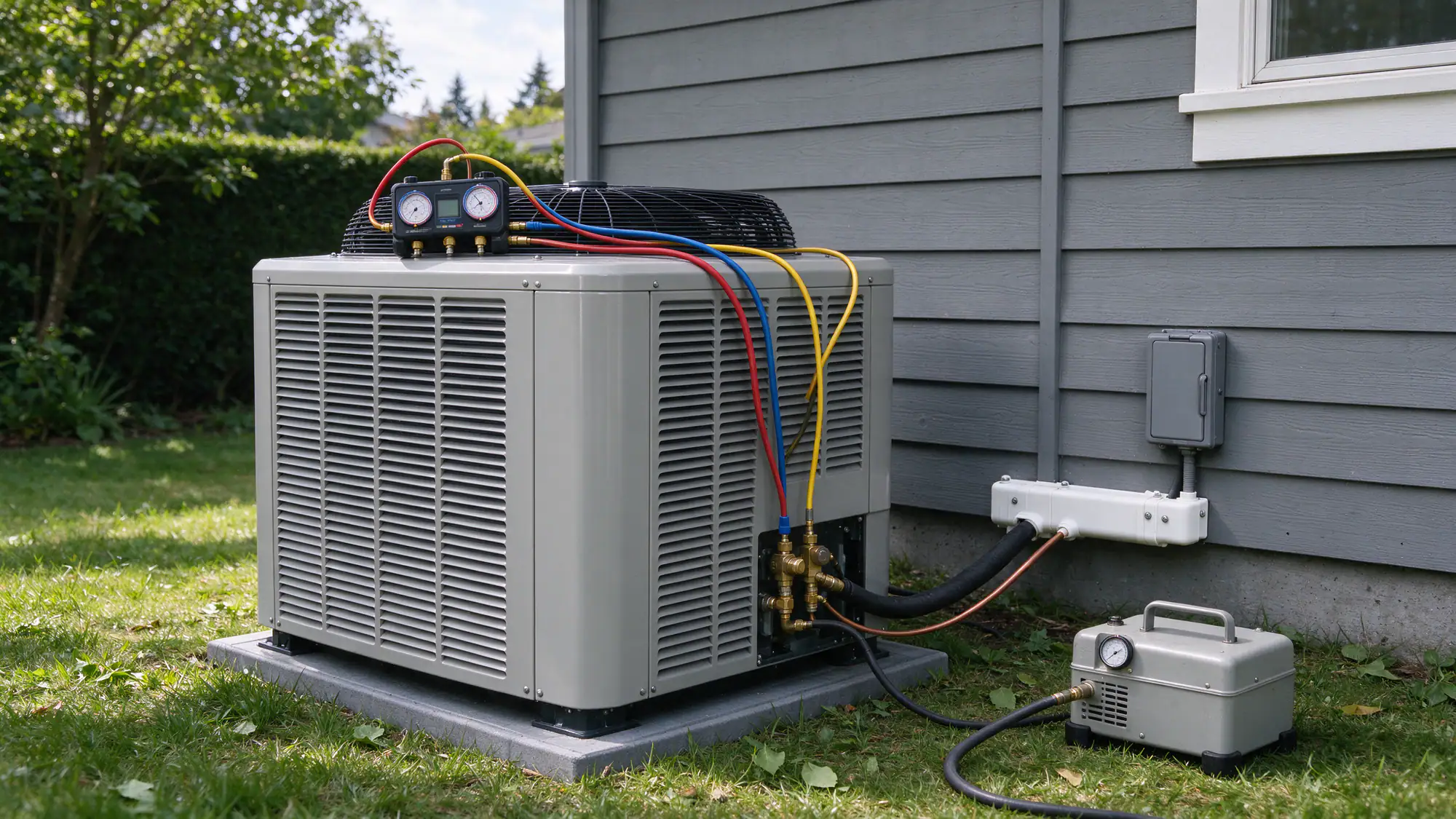
Ducted heat pump installation puts one system on your existing ductwork that heats the whole house in winter and cools it in summer. The Seattle Heat Pump Company plans these systems for houses across Seattle and King County, starting from a room-by-room load calculation and a measured look at the ducts, and the installation is carried out by licensed and insured contractors.
The equipment is the easy part. Whether a heat pump keeps your house comfortable depends on three things decided before anything is ordered: how much heat the house actually loses on a cold night, whether the ducts can move the air a heat pump needs, and where the outdoor unit can sit without breaking Seattle’s noise rules.
What happens on the first visit
The first visit is a measurement visit, not a sales pitch. It covers the house, the ducts, the electrical service and the yard.
The house. The load calculation starts with the building: square footage by room, ceiling heights, window area and orientation, insulation levels, and how leaky the house is. Seattle’s energy code requires heating and cooling loads calculated with ACCA Manual J and equipment selected with Manual S, sized no larger than needed to meet the load. The design point for Seattle is 24°F, from the city’s energy code tables. A 1950s rambler in Wedgwood that got new windows and attic insulation can need a smaller system than the furnace it is replacing, and the old nameplate will not tell you that.
The ducts. With the blower running, a static pressure reading across the system shows how hard the fan works to push air through the ducts. The return side gets particular attention, because many older Seattle systems have a single small return that was adequate for a hot gas furnace and is too small for a heat pump. Supply registers, visible leaks in the basement or crawlspace, and any rooms that already run cold or hot go on the list.
The electrical service. The panel’s size and what already runs on it decide whether a new circuit is enough or the service needs an upgrade. Whether electric backup heat is part of the design matters here, because resistance heat strips draw far more current than the heat pump itself.
The yard. The outdoor unit needs a stable pad or bracket, clearance for airflow and service, a short route for the refrigerant lines, and a spot that meets the noise limit at the property line. On a narrow Seattle lot, that last requirement often decides everything else.
You leave the visit with a recommended system, the reasons behind it, and the scope that the estimate covers.
Why the ducts decide whether a heat pump works
A gas furnace heats air to well above body temperature, so it can deliver a lot of heat with a modest amount of airflow. A heat pump delivers warm air at a lower temperature. To carry the same heat into a room, it has to move more air. Ducts that were fine for the furnace can be too small, too leaky or too restrictive for the heat pump that replaces it.
When airflow falls short, the symptoms are predictable: rooms at the end of long runs never quite warm up, the blower gets loud as it strains, the system runs longer and the electric backup heat comes on more than it should. These symptoms have more than one possible cause, which is why the duct test happens before equipment is chosen rather than after a complaint.
The fixes range from small to substantial:
- sealing obvious leaks at joints and boots in the crawlspace or attic
- adding a return or enlarging the existing return grille and its duct
- resizing a trunk line or replacing undersized branch runs
- in some older houses, replacing the duct system entirely
A variable-speed heat pump helps, because it spends most of its time running at low speed with lower airflow. It does not remove the need for adequate ducts at full output on a cold morning. For the measurements and the decisions behind them, see using a heat pump with existing ductwork.
Sizing for a Seattle winter, and a Seattle summer
Seattle winters are long and damp rather than severe. Sea-Tac averaged 25 nights a year at or below freezing and about one night a year at 20°F or colder over the 1991 to 2020 normals, and the coldest night between 1991 and 2025 was 14°F. That climate suits heat pumps well, with one wrinkle: in wet weather between about 30°F and 40°F, frost builds on the outdoor coil quickly, and the unit runs regular defrost cycles to clear it. A puff of steam from the outdoor unit on a cold morning is normal. Ice that keeps building is not.
Two sizing mistakes cause most comfort complaints. An undersized system leans on electric backup heat on cold nights and drives up the bill. An oversized one cycles on and off, which wastes energy and leaves the house feeling clammy in summer because short cycles do not remove much moisture. Seattle’s code addresses the first by requiring backup heat controls that keep supplemental heat off above 40°F, with the lockout set to 35°F or lower at final inspection.
Summer matters more than it used to. Sea-Tac’s cooling degree days roughly doubled between the 1990s and the last decade, and the June 2021 heat dome reached 108°F. The same load calculation that sizes for 24°F also sizes for an 83°F cooling design day, so one system handles both.
For most houses inside Seattle, a standard variable-speed heat pump sized to the load carries the house without a cold-climate model. That changes for houses with high heat loss or for sites like Redmond, where the design temperature is 17°F. The sizing guide walks through the numbers.
Installation and commissioning: what good work looks like
Most of the quality in a heat pump installation is invisible once the job is done, so it is worth knowing what should happen.
The refrigerant lines are brazed with nitrogen flowing through them, which keeps scale from forming inside the copper. The finished line set is pressure tested with nitrogen to find leaks before any refrigerant goes in. Then a vacuum pump pulls the system down to a deep vacuum, measured with a micron gauge, to boil off moisture and air. Only then is the refrigerant released and the charge verified against the manufacturer’s method.
Since January 1, 2026, Washington requires new residential heat pumps and air conditioners to use refrigerants with a global warming potential under 750, which rules out R-410A. The newer refrigerants are mildly flammable and come with their own handling rules, so the equipment, line set and indoor coil need to be specified for them.
Commissioning closes the job. Airflow is set and checked, temperatures and pressures are recorded in heating and cooling, the defrost cycle and the backup heat lockout are tested, the condensate drain is confirmed with water, and the thermostat is configured for heat pump staging rather than left on furnace settings. Then someone walks you through how the system should behave, including what defrost looks like, so a normal cycle does not look like a fault.
In Seattle, a split heat pump needs a refrigeration permit, which only a licensed refrigeration contractor can obtain, plus an electrical permit. Furnace or mechanical permits apply when the indoor equipment changes. The permit guide covers what each permit requires and who pulls it.
Get the load and duct numbers for your houseThe assessment tells you what size system the house needs and whether the ducts can carry it.
Get an EstimateWhat it costs, and what lowers the bill
For a ducted system on existing ducts that test as usable, Seattle-area projects typically fall between about $6,700 and $20,000. National cost guides put a central ducted heat pump at roughly $5,000 to $15,000 (Fixr), and the Bonneville Power Administration’s regional estimate for high-performance ducted retrofits averages about $17,000. The spread comes from a short list of drivers:
- capacity and efficiency tier of the equipment
- whether a coil goes on the furnace or a new air handler replaces it
- duct changes, from sealing to new returns
- a new circuit or a full panel upgrade, which in the Seattle area typically runs about $1,333 to $4,500 for 100 to 200 amps
- line-set length and access to the crawlspace, attic or roof
Incentives change the net price. Seattle City Light offers contractor discounts of $300 or $600 on qualifying heat pumps, depending on the efficiency tier. Oil-heated homes can qualify for Seattle Clean Heat’s $2,000 rebate, and PSE runs its own programs in suburban territory. The federal 25C tax credit ended for equipment placed in service after December 31, 2025. The installation cost guide breaks each driver down, and the cost estimator gives a range for your house before you share any contact details.
Which utility you have changes the advice
Inside Seattle, City Light sells the electricity and PSE sells the gas. At City Light’s current residential rate of 13.38 cents per kWh, a heat pump beats a 95% efficient gas furnace on energy cost once it averages a coefficient of performance of about 2.2, which a modern unit clears through most of a Seattle winter. On the Eastside, PSE sells both, and at its rate of about 20.6 cents per kWh the break-even is closer to 3.4. That is why a homeowner in Ravenna and one in Bellevue with identical houses can get different, equally sensible advice about keeping the furnace. See dual fuel heat pumps for how the changeover works.
What's included
- Room-by-room heating and cooling load calculation
- Duct static pressure and return-side assessment
- Equipment matched to the load and the duct system
- Outdoor unit on a pad or bracket, sited for Seattle's noise limits
- Indoor coil or air handler matched to the outdoor unit
- New or tested refrigerant line set with insulation
- Condensate drain with overflow protection
- Dedicated circuit and outdoor disconnect
- Thermostat configured for heat pump staging and backup lockout
- Permits, inspections and startup commissioning
Three ways to put a heat pump on your ducts
| Heat pump on existing furnace | Heat pump with new air handler | Heat pump plus duct rework | |
|---|---|---|---|
| What changes | Outdoor unit and a coil on the furnace | Outdoor unit and an electric air handler replaces the furnace | Either of the first two, plus new returns, resized trunks or sealed runs |
| Typical situation | Gas furnace with years left, dual fuel planned | Oil or gas furnace at end of life, all-electric planned | Ducts fail the static pressure test or rooms run cold |
| What the assessment checks | Coil fit, blower capacity, changeover setting | Air handler location, panel capacity, backup heat size | Measured airflow, return area, leakage |
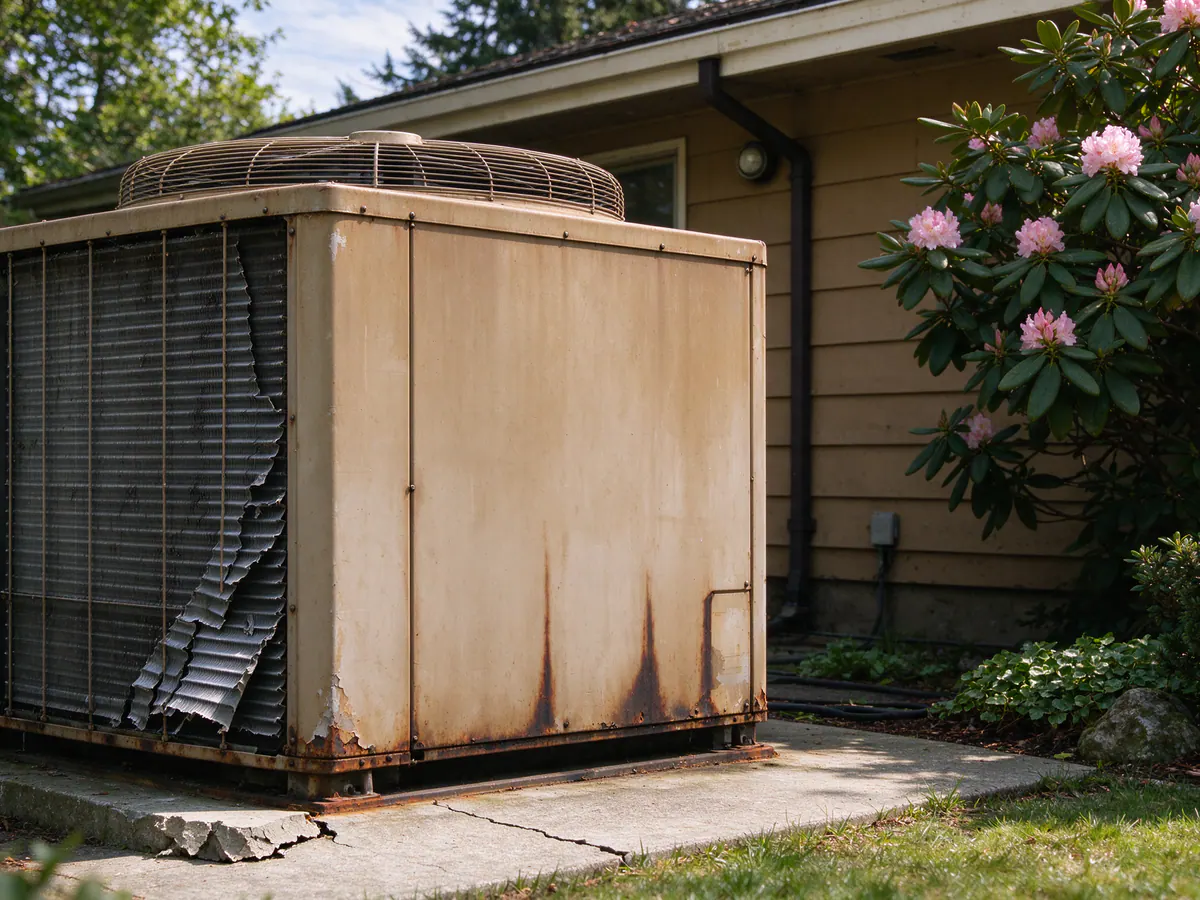
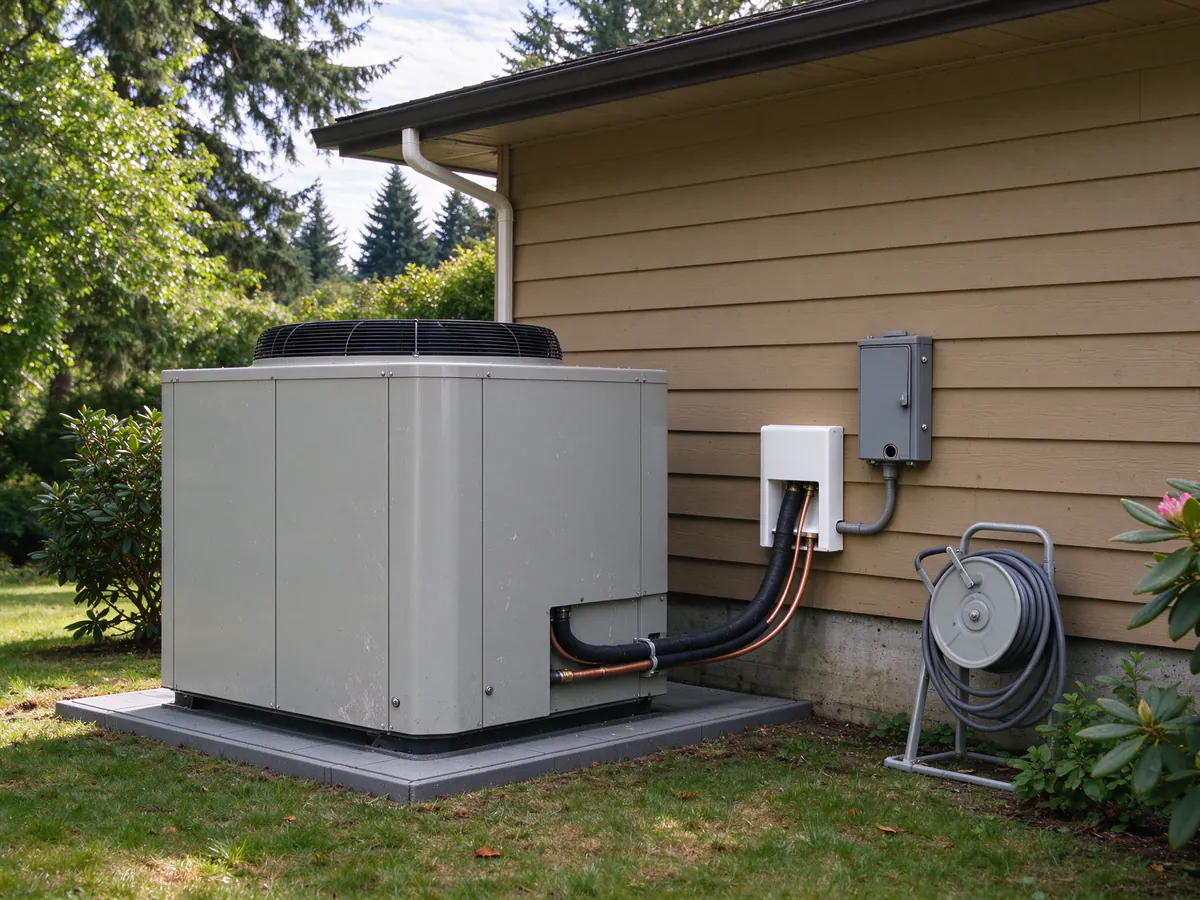
Representative photos
Representative photos of this type of work, not photos of specific completed jobs.
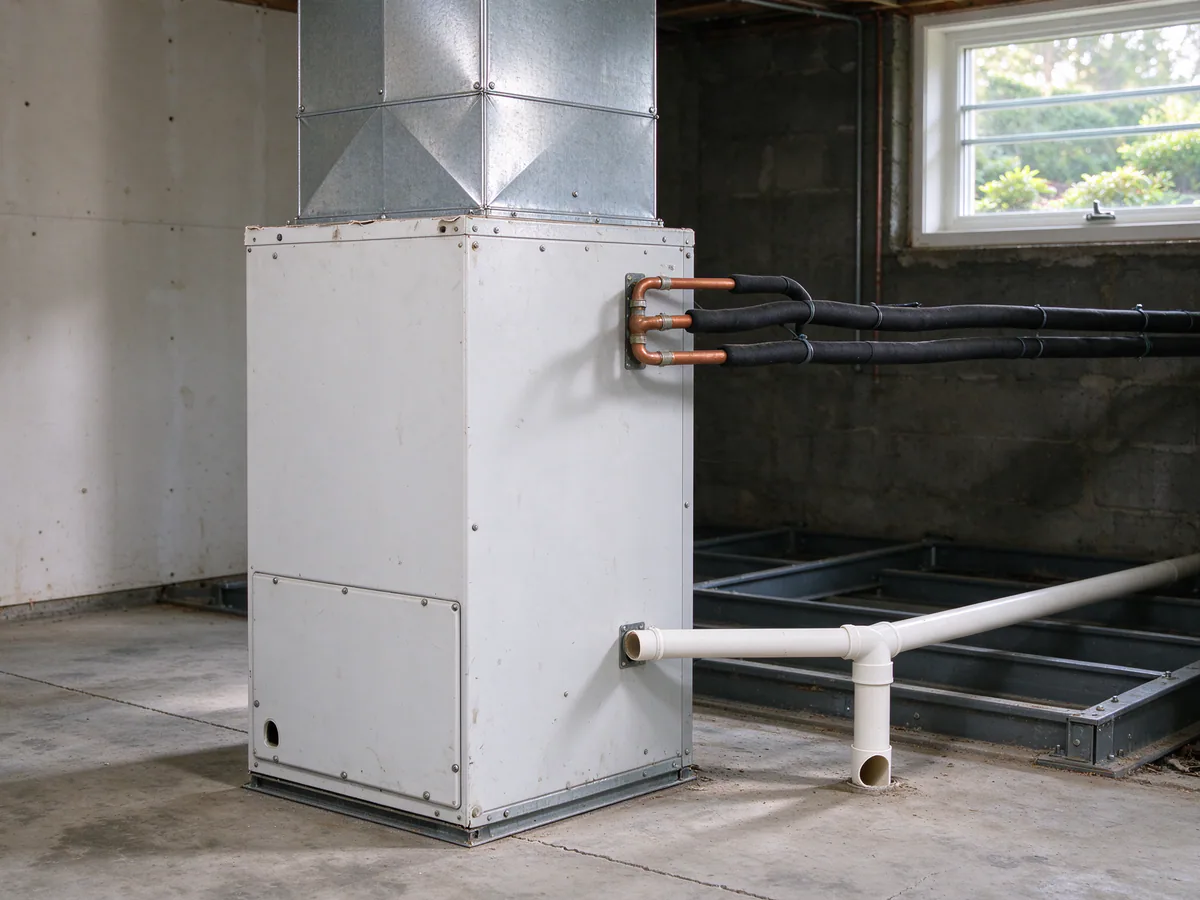
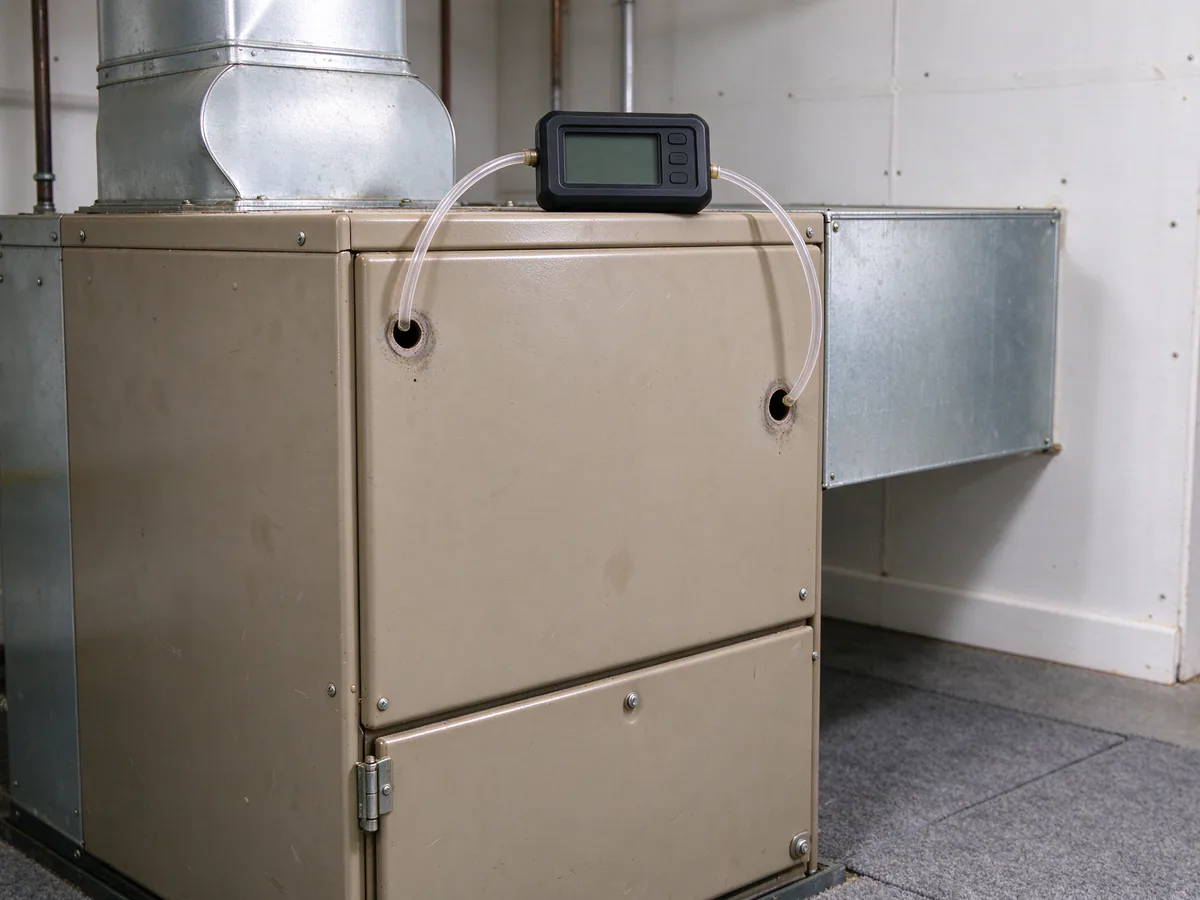
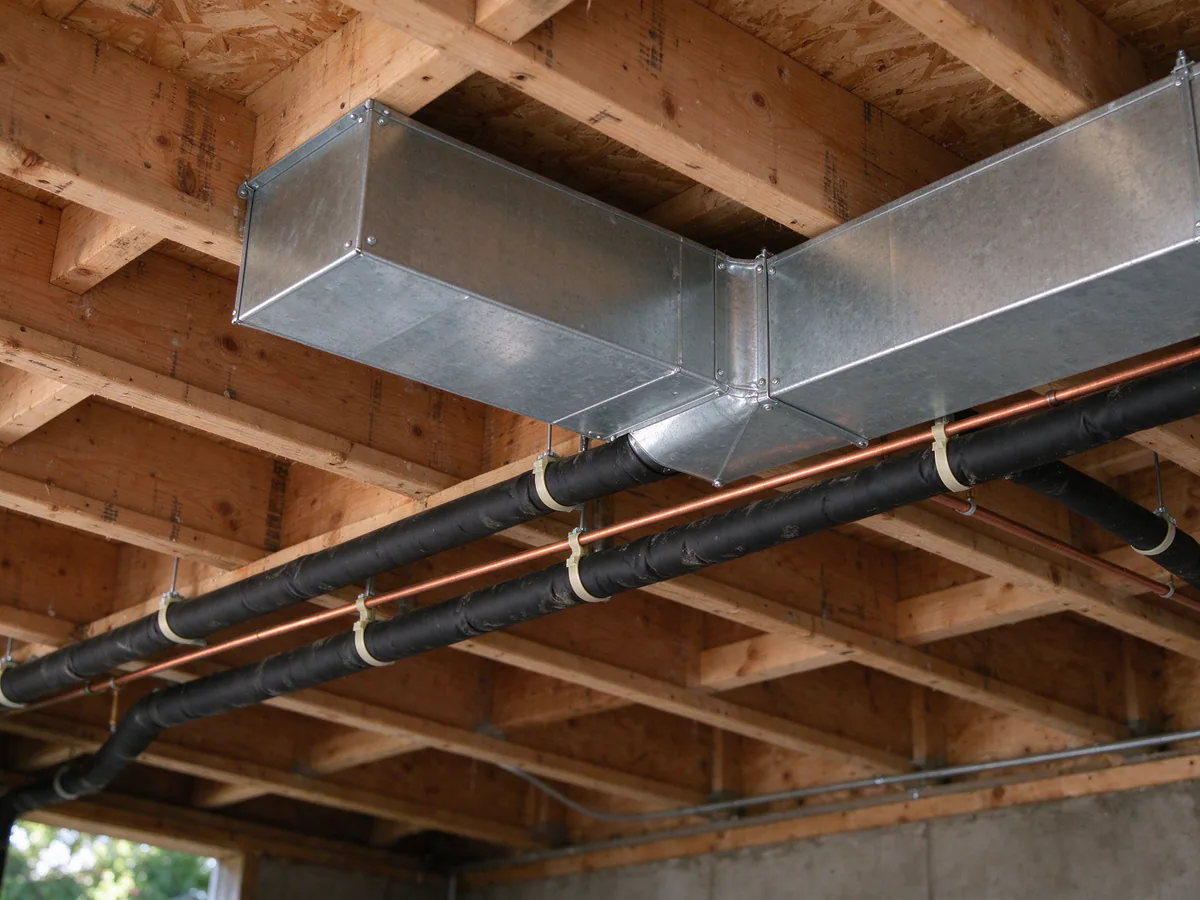
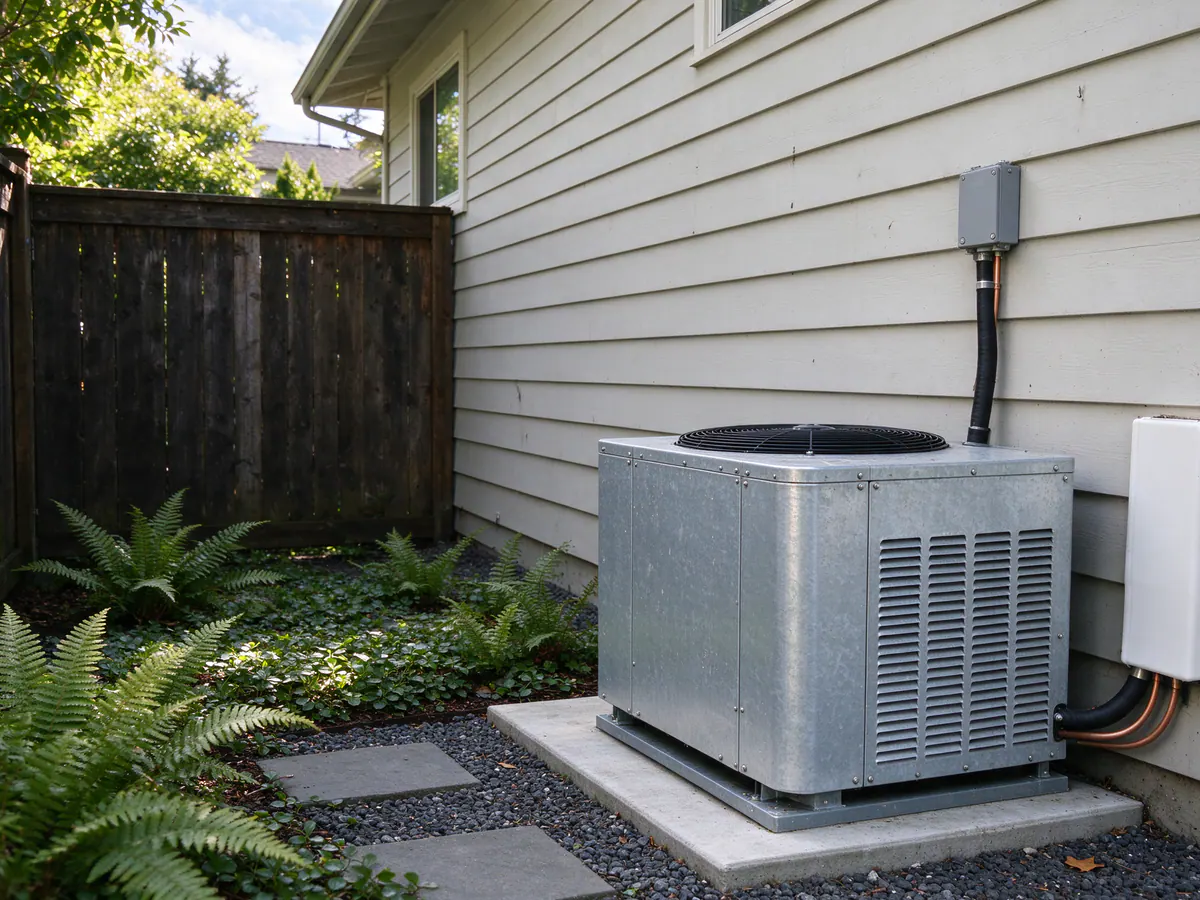
Before and after (representative)
Questions about ducted heat pump installation
How long does a ducted heat pump installation take?
The installation itself usually takes one to three days for a straightforward replacement on usable ducts. Duct rework, an electrical service upgrade or an oil tank decommissioning adds time. Permits and equipment availability set the lead time before work starts, so the schedule is confirmed once the scope is settled.
Do I need a new air handler or can the heat pump use my furnace?
Both work. A heat pump coil can sit on a gas furnace whose blower has enough capacity, which is the usual dual fuel setup. If the furnace is old, burns oil, or you want to go all-electric, an electric air handler replaces it. The furnace's age and blower size decide which makes sense.
Will a ducted heat pump be loud outside?
Modern variable-speed outdoor units are quiet at low speed, but Seattle measures noise at the property line, not at the unit. Side-yard installs need a noise review, and a predicted level of 47 dBA or less on the heating rating passes. Siting, a pad that isolates vibration and the model's sound rating all matter.
Is a cold-climate heat pump necessary in Seattle?
Usually not inside the city, where the design temperature is 24°F. Cold-climate models keep more of their capacity below freezing, which matters more in Redmond, where the design temperature is 17°F, or for houses with high heat loss. The load calculation shows whether a standard unit carries the house at design conditions.
What permits does a heat pump need in Seattle?
A refrigeration permit for the split system, which only a licensed refrigeration contractor can obtain, plus an electrical permit for the circuit and a furnace or mechanical permit when the indoor equipment changes. Suburbs such as Bellevue issue their own mechanical permits. Permit fees in Seattle run about $192 to $556 for a typical job.
Related services
Related guides
Plan a ducted heat pump for your houseTell us what heats the house now and which rooms give you trouble.
Get an Estimate