Service Area
Heat Pump Installation and Oil Conversions in Rainier Valley and Seward Park, WA
Last Updated
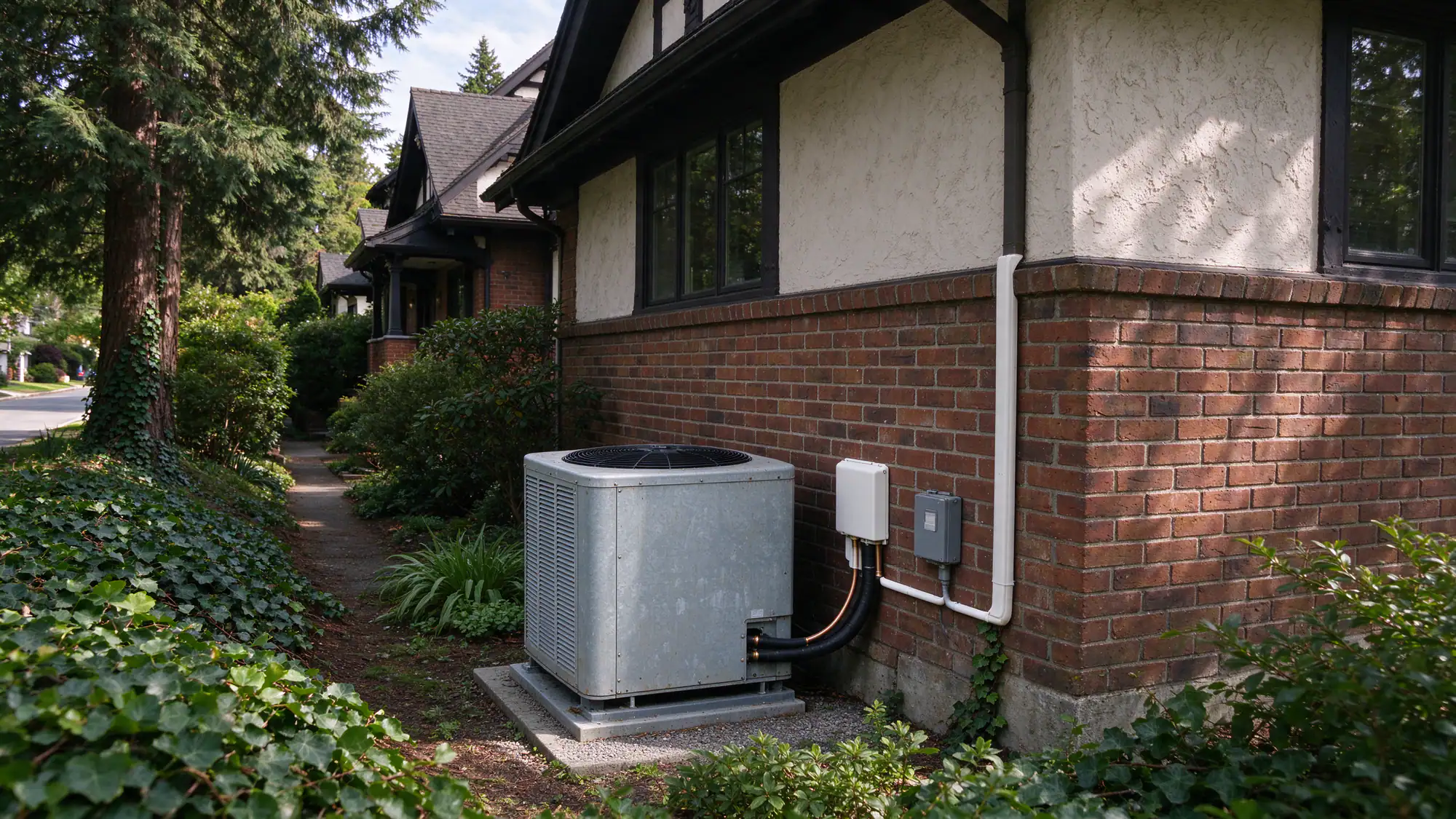
For many households in Rainier Valley and Seward Park, the deciding question about a heat pump is not the equipment but the funding path, because Seattle’s largest heat pump incentives scale with household income and fuel. The Seattle Heat Pump Company plans ducted heat pump installations and oil conversions from Columbia City and Mount Baker to Seward Park, Brighton and Rainier Beach, works through which programs fit each house, and has licensed and insured contractors carry out the work.
Over the latest three years of records, City of Seattle open data counts 1,224 single-family heat pump trade permits in the Rainier Valley district and 457 in Seward Park, 1,681 in all. About 30% of Rainier Valley’s permits and 31% of Seward Park’s named ducted equipment, the highest shares in south Seattle. Mount Baker reached about 35%.
Housing that already has ducts
Seward Park has the third-highest share of pre-1960 homes in Seattle: about 54% predate 1960 and the median dates from the 1950s, by Census counts. Rainier Valley is somewhat younger, with about 41% before 1960. Many houses of that period were built with a central furnace and a duct system, and the high ducted permit shares here are consistent with that.
Fuel splits differently across the two districts. About 48% of Seward Park households heat with gas, compared with about 34% in Rainier Valley. Roughly 599 Rainier Valley households and 217 in Seward Park still burn oil. That mix decides which incentives apply, so fuel comes before income in the sorting below.
Sorting the funding paths
The programs below are current. They change, and some depend on documents you will need to gather, so the Seattle rebate guide keeps the latest terms.
| If the house heats with | And household income is | What may apply |
|---|---|---|
| Oil | At or below about 80% of area median | Office of Housing HomeWise no-cost conversion, including the tank |
| Oil | 81% to 150% of area median | Seattle Clean Heat $2,000 plus $4,000 bonus, installs completed within the program’s current funding period |
| Oil | Above 150% of area median | Seattle Clean Heat $2,000 on a qualifying system |
| Gas (PSE) | Income-qualified under PSE’s rules | PSE $4,000 gas-to-heat-pump rebate; confirm with PSE |
| Any | Any | City Light contractor discount of $300 or $600 on qualifying equipment |
Oil homes
Seattle Clean Heat’s $2,000 base rebate applies to a qualifying Mitsubishi Electric heat pump installed by a participating contractor in an oil-heated Seattle home. The $4,000 bonus for households between 81% and 150% of area median income is funded by the state’s HEAR program through the city; for a four-person household that range ran from about $116,650 to $246,600 on the program’s published table. Households below that range can apply to HomeWise, which covers the conversion and the tank at no cost to eligible owners. The oil tank must be decommissioned under Seattle Fire Department rules in every case. See oil to heat pump conversion for the scope and the oil conversion cost guide for how the pieces are priced.
PLIA’s Heating Oil Loan and Grant program is a separate source, and it is not income-limited. It offers up to $75,000 per project, mainly for leak cleanup, with a loan option that can cover conversion or decommissioning. PLIA must approve the work before it begins, and decommissioning first forfeits the funding. PLIA takes applications in a limited window each year, usually in late fall, so check PLIA’s site for the current dates.
Gas homes
PSE’s income-qualified rebate of $4,000 applies when a heat pump replaces gas heat and the gas equipment is removed or capped. Its terms require PSE gas service but not PSE electric, which means Seattle households on PSE gas may be eligible; PSE should confirm before you rely on it. Since April 2, 2026, PSE rebates require a PSE Trade Ally installer. The conversion itself follows our furnace to heat pump conversion process.
After the install
Income-qualified Seattle residents can also enroll in the city’s Utility Discount Program, which takes 60% off City Light bills. That does not reduce the installation price, but it changes the running-cost math for a house moving its heating onto electricity.
What the house still decides
Funding changes the price, not the engineering. Every project starts with a room-by-room load calculation for Seattle’s 24°F design day and a static pressure test on the ducts. A heat pump delivers air at a lower temperature than a furnace and needs more airflow, so systems with a single return or long runs to an added room can fall short. Using a heat pump with existing ductwork explains how those results translate into fixes.
The electrical panel matters too, particularly in oil-heated houses that never carried a large electric load. A 100A to 200A upgrade typically adds about $1,333 to $4,500 in the Seattle area. Ask whether a given program covers it; HomeWise scopes are set by the program, not by the contractor.
Outdoor unit placement follows Seattle’s noise limits of 55 dBA by day and 45 dBA at night at the property line. Side-yard units go through SDCI’s noise review and pass at a predicted 47 dBA or less on the heating rating. Where a lot slopes toward the street or the lake, the pad location and refrigerant line route are settled on site rather than assumed.
Permits follow the usual Seattle pattern: a refrigeration permit pulled by a licensed refrigeration contractor, an electrical permit and a furnace permit when indoor equipment changes, about $192 to $556 under SDCI’s current fee schedule for a typical job, plus the $184 fire permit for each oil tank. Oil tank decommissioning explains that side of the job.
Running costs on City Light
Both districts buy electricity from Seattle City Light at 13.38 cents per kWh. At that rate a heat pump beats a 95% efficient gas furnace on energy cost once it averages a coefficient of performance of about 2.2, and modern units clear that through most of a Seattle winter. There is no official Washington series for heating oil prices, so oil comparisons rest on your own delivery receipts. The Seattle installation cost guide and the full ducted heat pump installation scope fill in the rest. North of I-90, see Capitol Hill and the Central District.
Around Rainier Valley & Seward Park
Neighborhoods
- Columbia City
- Mount Baker
- Seward Park
- Rainier Beach
- Brighton
- Rainier View
- Dunlap
- Seward Park
- Columbia City Landmark District
- Kubota Garden
- Lake Washington Blvd
- Rainier Ave S
- MLK Jr Way S
- Light rail 1 Line
- Seward Park Ave S
- I-5
- Seattle City Light (electric), PSE (gas)
- Seattle Department of Construction & Inspections
Services in Rainier Valley & Seward Park
Rainier Valley & Seward Park heat pump questions
What does a ducted heat pump cost in Rainier Valley before rebates?
Seattle-area ducted heat pumps on usable ducts typically cost about $6,700 to $20,000; Rainier Valley has no separate band. Oil homes add tank decommissioning, about $700 to $3,000 to fill a clean tank in place plus a $184 fire permit. These are budgeting ranges, not quotes, and the rebates on this page come off them.
Is the free oil conversion only for very low incomes?
The Office of Housing's HomeWise program covers income-eligible Seattle households, roughly those at or below 80% of area median income, with thresholds that vary by heat source. Households from 81% to 150% of median are not left out: they qualify for Seattle Clean Heat's $4,000 bonus on top of the $2,000 base rebate.
I heat with gas, not oil. Is there income-based help?
Seattle Clean Heat is for oil homes only. PSE offers a $4,000 income-qualified rebate for replacing gas heat with a heat pump, and its terms do not require PSE electric service, so Seattle gas customers may qualify. Confirm eligibility with PSE before work starts, and note that installs must be done by a PSE Trade Ally since April 2, 2026.
Can a Mount Baker house use its existing ducts?
Often. Mount Baker had the highest share of ducted heat pump permits in south Seattle over the latest three years of records, about 35%. The ducts still need a static pressure test, because a heat pump needs more airflow than the furnace it replaces, and returns are the usual weak point in older systems.
Do I have to decommission my oil tank to get the Clean Heat rebate?
Yes. The program requires the tank to be decommissioned under Seattle Fire Department rules, by an ICC-certified decommissioner holding the permit. If you also want PLIA's Heating Oil Loan and Grant funding, apply and get approval first, because work done before approval is not reimbursed. Check PLIA's site for when the next window opens.
Related guides
Nearby service areas
Find the right funding path for your houseTell us about the house and the system you have now.
Get an Estimate