Service Area
Ducted Heat Pump Installation in Magnolia and Queen Anne, WA
Last Updated
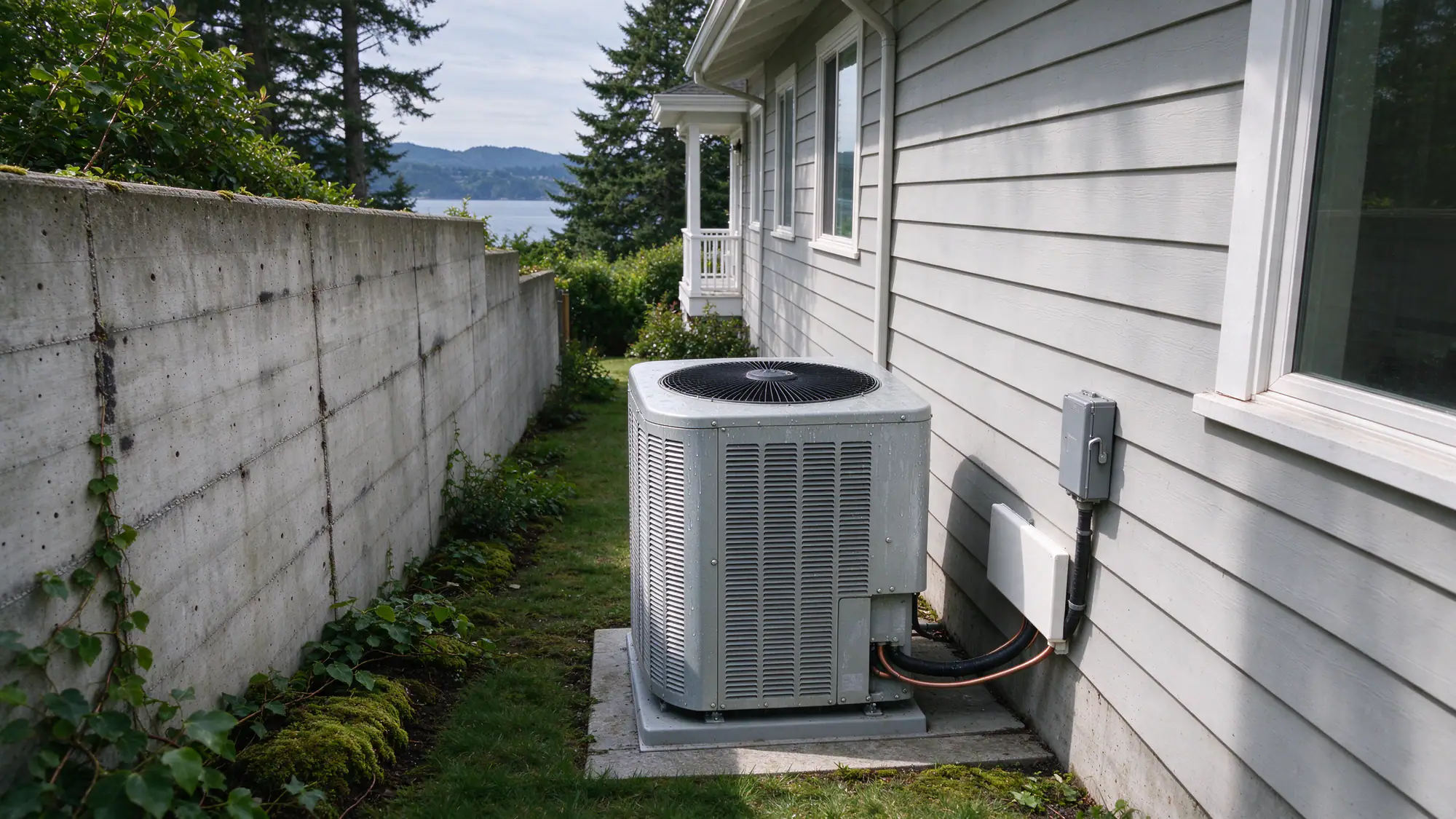
In Magnolia and Queen Anne the hard part of a heat pump project is often outside: where the outdoor unit can sit on a sloped or bluff-top lot so it stays level, quiet at the property line and protected from salt air. The Seattle Heat Pump Company plans ducted heat pump installations across Lawton Park, Briarcliff, Southeast Magnolia and all sides of Queen Anne Hill, and licensed and insured contractors install them.
The two neighborhoods are also among Seattle’s most active for heat pumps. City of Seattle open data shows 887 single-family heat pump trade permits in Magnolia and 838 in Queen Anne over the latest three years of records. Measured against the number of one- and two-unit homes, Magnolia’s rate of about 148 per 1,000 is the second-highest in the city.
Two neighborhoods, two housing profiles
Magnolia is a mid-century district. About 58% of its homes predate 1960, the second-highest share in Seattle after Northeast Seattle, and the median house dates from the 1950s. About half of Magnolia households heat with gas, the highest share of any Seattle district, and about 6.4%, some 471 homes, still burn oil. Lawton Park filed 331 heat pump permits in the three-year window and Briarcliff 289, with 82 of Briarcliff’s naming ducted equipment.
Queen Anne is older at the core and denser overall. About 27% of its homes predate 1940, but the median home dates from the 1970s, reflecting apartments and newer infill. Only about 1.6% of households use oil, and about 31% heat with gas. North Queen Anne led the hill with 325 permits.
Those profiles point to different typical jobs. In Magnolia, a gas or oil furnace on existing ducts is the usual starting point, handled as a furnace to heat pump conversion or an oil to heat pump conversion. On Queen Anne, where more than a quarter of homes predate 1940 and only about 21% of permits named ducted equipment, the duct question needs a closer look; the older homes page covers those cases.
Siting on a slope
Where a lot falls away from the house, the obvious flat spot for a pad may not exist. The choices come down to a few approaches.
A built-up pad. A level pad set on compacted base or a small footing works where the slope is gentle. It needs drainage around it so water does not undercut it or pool in the unit’s base pan.
A wall bracket. A bracket rated for the unit, fastened into framing or masonry, puts the unit level regardless of grade and lifts it above runoff. The bracket needs vibration isolation so compressor hum does not carry into a bedroom wall.
A lower terrace or retaining wall. On terraced lots the unit sometimes goes on a lower level, which lengthens the refrigerant line set. Manufacturers set limits on line length and on the height difference between indoor and outdoor units, and longer runs can need extra refrigerant charge, so the route is measured before equipment is chosen.
Access matters as well. Getting the outdoor unit, an air handler and old equipment up or down exterior stairs is part of planning the job on a hillside, and service access has to remain once everything is in place.
The noise review on a tight hillside lot
Seattle limits residential noise to 55 dBA by day and 45 dBA at night at the property line, and a heat pump runs through winter nights. On a hillside, the flat ground closest to the house is often a narrow side yard, which brings SDCI’s noise review into play. A side-yard unit passes when the predicted level at the property line is 47 dBA or less on its heating sound rating; above that, the fix is a quieter model, a sound barrier, a compressor blanket or a different location. Elevation can cut both ways: a unit above a neighbor’s yard may have a clear sound path down to it. The Seattle noise ordinance guide walks through the numbers.
Salt air on Magnolia Bluff
Magnolia’s western and southern edges are bluffs facing Puget Sound, from Discovery Park around to the Magnolia Bridge, and parts of West Queen Anne look out over Elliott Bay. Houses there sit in onshore wind that carries salt, and salt deposits on outdoor coil fins hold moisture and speed corrosion. Mitsubishi Electric offers coil coatings and a seacoast protection package on some outdoor units, and Carrier advises washing coastal units about every three months. No manufacturer publishes a distance threshold, so water-facing lots are planned as coastal, with the unit on the sheltered side where the slope allows. The heat pump maintenance guide covers the rinse routine.
Inside the house
Sizing follows Seattle’s energy code: a room-by-room ACCA Manual J load for a 24°F design day and equipment no larger than the load requires. View houses with large west-facing windows can carry a bigger cooling load than their heating load suggests, so both are calculated. The ducts then get a static pressure test, since a heat pump needs more airflow than a furnace and older returns are often too small. Backup electric heat, where used, is locked out above 40°F under the energy code.
For Magnolia’s oil homes, the tank is decommissioned under a Seattle Fire Department permit by an ICC-certified decommissioner after the heat pump is running. Seattle Clean Heat takes $2,000 off a qualifying system in an oil-heated Seattle home, with $4,000 more for households between 81% and 150% of area median income on installs completed within the program’s current funding period. Oil tank decommissioning explains removal versus filling in place.
Permits and running costs
A split system in Seattle needs a refrigeration permit, which only a licensed refrigeration contractor can obtain, and an electrical permit, plus a furnace permit when the indoor equipment changes. Typical current SDCI fees run about $192 to $556 per job. The Seattle heat pump permit guide explains who pulls what and when inspections happen.
Both neighborhoods buy electricity from City Light at 13.38 cents per kWh. At that rate a heat pump beats a 95% efficient gas furnace on energy cost above a coefficient of performance of about 2.2, which a modern unit sustains through most Seattle weather. City Light’s contractor discount of $300 or $600 applies to qualifying equipment. For the full process, see ducted heat pump installation; across the canal, Ballard shares the saltwater edge.
Around Magnolia & Queen Anne
Neighborhoods
- Lawton Park
- Briarcliff
- Southeast Magnolia
- North Queen Anne
- West Queen Anne
- East Queen Anne
- Discovery Park
- Magnolia Bluff
- Kerry Park
- Queen Anne Ave counterbalance
- Magnolia Bridge
- W Dravus St
- Queen Anne Ave N
- 15th Ave W
- Elliott Ave W
- Seattle City Light (electric), PSE (gas)
- Seattle Department of Construction & Inspections
Services in Magnolia & Queen Anne
Magnolia & Queen Anne heat pump questions
How much does a heat pump cost in Magnolia or Queen Anne?
Seattle-area ducted heat pumps on usable ducts typically run about $6,700 to $20,000, and neither neighborhood has its own price band. A sloped lot can add pad, bracket or line set work, which are priced from the site. Oil homes add tank decommissioning, about $700 to $3,000 for a clean fill in place plus a $184 permit.
Can the outdoor unit go on a wall bracket on a steep lot?
Often. A wall bracket keeps the unit level where the ground is not, and lifts it clear of runoff and debris. The bracket has to be rated for the unit, fixed into solid framing or masonry, and isolated so vibration does not carry into the house. Seattle's noise limit still applies at the property line.
My Magnolia house is on the bluff. Will salt air shorten the unit's life?
Salt raises the corrosion risk on outdoor coils, and no one can promise a specific lifespan either way. The practical steps are a unit offered with a coated coil or seacoast package, a sheltered location away from the water side, and regular rinsing; Carrier advises washing coastal units about every three months.
Who pulls the permits for a Seattle heat pump?
The contractors do. Only a licensed refrigeration contractor can obtain the refrigeration permit for a split system, and the electrical permit goes to the electrical contractor. A furnace permit applies when the indoor equipment changes. SDCI inspects the work, and typical fees run about $192 to $556 for a job.
Why do so many Magnolia homes get heat pumps?
Permit data shows Magnolia filed about 148 single-family heat pump permits per 1,000 homes over the latest three years of records, second in Seattle. The housing helps explain it: most homes predate 1960, about half heat with gas, and about 6.4% still burn oil, all common starting points for a ducted conversion.
Related guides
Nearby service areas
Plan a heat pump for your Magnolia or Queen Anne lotTell us about the house and the system you have now.
Get an Estimate