Service
Dual Fuel Heat Pump Installation in Seattle
Last Updated
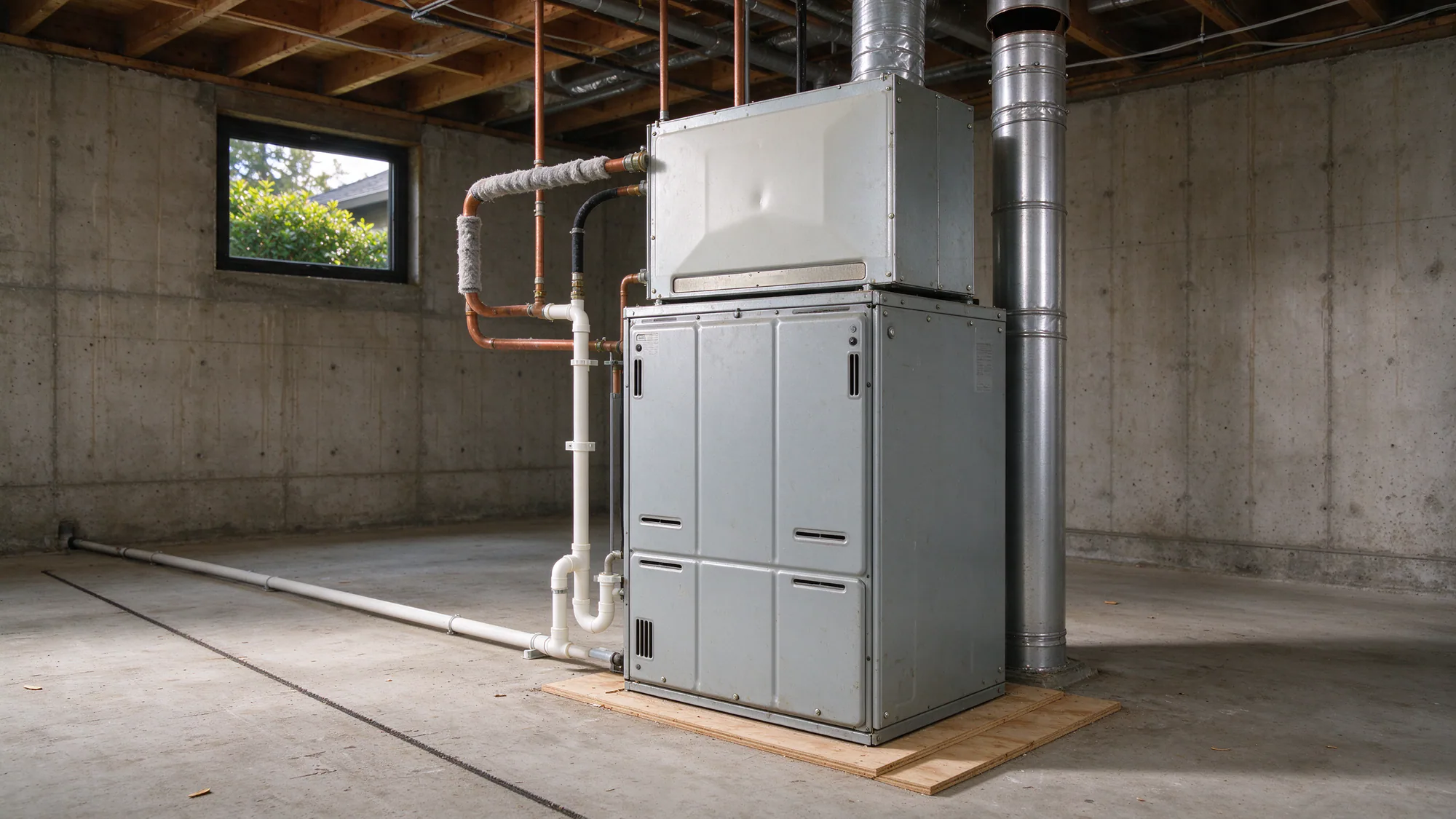
A dual fuel heat pump pairs an electric heat pump with your existing gas furnace: the heat pump heats and cools the house most of the year, and the furnace takes over when it is colder or cheaper to burn gas. The Seattle Heat Pump Company plans dual fuel systems for houses across Seattle and King County, and licensed and insured contractors install them. The setting that makes or breaks the system is the changeover temperature.
Get that setting wrong and a dual fuel system either burns gas when the heat pump would have been cheaper, or leans on a heat pump that costs more to run than the furnace. Getting it right depends on the house’s heat loss, the equipment’s performance and which utility sells your electricity, and in this region that last factor changes the answer more than anything else.
What happens on the first visit
Because the furnace stays, the visit checks it as carefully as the house.
The furnace. Age and condition come first: building a heat pump around a furnace near the end of its life usually means paying twice. The blower matters most. A heat pump coil adds resistance, and the blower has to push enough air across it for the heat pump’s capacity. Variable-speed blowers adjust to that; older single-speed blowers sometimes cannot. Combustion and venting are checked separately, because adding a coil does not change the furnace’s own safety requirements.
The space above the furnace. The coil sits on the furnace’s supply side, inside a cabinet that must fit the furnace width and the plenum above it. A tight basement ceiling or an awkward transition can decide which coil works.
The house and ducts. A Manual J load calculation gives the heat loss at Seattle’s 24°F design temperature and at every temperature in between, which is what the balance point is built from. A duct static pressure test confirms the ducts can carry the heat pump’s airflow; the existing ductwork page explains what it measures.
The utility. Which company sells your electricity, and whether you have PSE gas, decides both the economics and the rebates.
Balance point and changeover temperature
A dual fuel system needs one decision a heat-pump-only system does not: at what outdoor temperature should the furnace take over? Two different balance points feed that decision.
The thermal balance point
As the outdoor temperature drops, the house loses heat faster and the heat pump’s capacity falls. The thermal balance point is the temperature where the two lines cross: above it, the heat pump carries the whole house; below it, it needs help. A heat pump sized to the load in Seattle’s mild climate usually has a low thermal balance point, because the design temperature is 24°F and Sea-Tac averages about one night a year at 20°F or colder. Below the thermal balance point, the furnace has to take over regardless of cost. The sizing guide shows how the load line is built.
The economic balance point
The economic balance point is the temperature where the heat pump’s cost per unit of heat equals the furnace’s. A heat pump’s coefficient of performance, the heat it delivers per unit of electricity, falls as the outdoor air gets colder. With PSE gas at about $1.67 per therm, a heat pump beats a 95% efficient furnace when its COP stays above about 2.2 on City Light’s Seattle rate, about 2.4 on City Light’s suburban rate, and about 3.4 on PSE electricity at about 20.6 cents per kWh. The temperature where a given model’s COP falls below those figures comes from the manufacturer’s published performance data, and on PSE it arrives much sooner.
The changeover is set at whichever balance point is higher. On City Light the thermal point usually governs, which is why dual fuel rarely saves money there. On PSE the economic point usually governs, which is why dual fuel is a common recommendation on the Eastside.
Setting the changeover higher than the numbers suggest, say 45°F, won’t damage anything; the furnace simply runs more and the gas bill rises relative to the electric bill. Seattle’s energy code also limits heat pump supplemental heat, keeping it off above 40°F with the lockout set to 35°F or lower at final inspection, so the control settings should be documented at commissioning rather than left at factory defaults. The backup heat settings guide walks through the thermostat side.
Find your changeover temperatureWe run your rates against the house's heat loss so the furnace runs only when it should.
Get an EstimatePutting the coil on the furnace
The heat pump’s indoor coil replaces any existing air conditioning coil on the furnace. Even a newer AC coil usually cannot stay, because a heat pump coil has to work in both directions and be rated as a matched system with the new outdoor unit. Since January 1, 2026, Washington has required newly installed residential heat pumps to use a refrigerant with a global warming potential below 750, which rules out R-410A coils left from older systems.
In heating mode, the furnace and heat pump do not normally heat at the same time. Furnace heat passing over an active heat pump coil drives refrigerant pressures up, so the controls run one or the other. During defrost, the controls may briefly fire the furnace to temper the air while the outdoor coil clears. That handoff is part of commissioning: both modes are tested, airflow is set across the coil, the condensate drain is confirmed and the furnace’s combustion is checked on its own terms.
The ducted heat pump guide explains how the coil and the furnace blower work together.
Controls
The control system is what makes dual fuel work. It needs to know the outdoor temperature, either from an outdoor sensor or the equipment’s own communication, and it needs dual fuel logic to lock the heat pump out below the changeover and the furnace out above it. Many standard thermostats can do this; communicating systems from some manufacturers do it through their own controls. A heat pump compatible smart thermostat runs about $200 to $500 installed in national figures (HomeGuide).
Dual fuel or all-electric
Dual fuel and an all-electric heat pump share most of the equipment; the difference is what supplies backup heat. In an all-electric system, an air handler with resistance strips covers defrost and the coldest hours. In dual fuel, the gas furnace does. That choice rests on a few conditions:
- The furnace’s remaining life. A newer furnace is a sunk cost worth using; an old one is better replaced by an air handler.
- Your electric rate. On City Light, the heat pump is the cheaper heat almost all winter. On PSE, the furnace wins on more cold days.
- Whether gas stays anyway. If a gas water heater or range keeps the gas service, the monthly basic charge continues either way.
Dual fuel also keeps a combustion appliance in the house, with its venting and carbon monoxide considerations, and it does not protect against outages, because the furnace needs electricity too. The furnace to heat pump conversion page covers the all-electric route, and the heat pump versus gas furnace guide compares the two systems in full.
What it costs, and the PSE rebate
A heat pump added to an existing furnace falls within the ducted installation range of about $6,700 to $20,000 for Seattle-area projects on usable ducts, as, a budgeting range, not a quote. There is no reliable published figure for the dual fuel add-on itself, so the drivers matter more than a number: the heat pump’s capacity and efficiency tier, the coil and any plenum changes, blower upgrades if the furnace’s blower falls short, the line-set route, the controls and any duct corrections. The cost estimator gives a range for your house, and the installation cost guide breaks down each driver.
PSE pays a hybrid heat pump rebate of $1,500, or $2,400 for income-qualified households, for adding a heat pump to a gas furnace. It requires both PSE gas and PSE electric service, so it applies on the Eastside and in other combined PSE areas such as Bellevue and Kirkland and Redmond, but not inside Seattle. Since April 2, 2026, PSE rebates require a PSE Trade Ally installer, so confirm that before signing. City Light customers can use City Light’s contractor discount of $300 or $600 on qualifying equipment instead. The federal 25C credit ended for equipment placed in service after December 31, 2025. The PSE rebate guide has the current terms, and the operating cost guide shows how the changeover affects your bills.
What's included
- Load calculation and thermal balance point estimate
- Furnace age, condition and blower capacity review
- Heat pump coil matched to the outdoor unit and fitted to the furnace
- Outdoor unit on a pad or bracket, sited for noise limits
- Thermostat or control board with dual fuel logic and an outdoor temperature input
- Changeover temperature set from your utility rates and the equipment's performance
- Furnace venting and combustion safety checked separately
- Condensate drain for the new coil
- Permits, inspections and commissioning in heat pump and furnace modes
Dual fuel compared with an all-electric heat pump
| Dual fuel (heat pump plus gas furnace) | All-electric (heat pump plus air handler) | |
|---|---|---|
| Backup heat | Gas furnace below the changeover temperature | Electric resistance strips in the air handler |
| Where it fits best | Newer furnace, PSE electricity, gas service staying anyway | Older furnace, City Light electricity, plan to drop gas |
| What the assessment checks | Blower capacity, coil fit, changeover economics | Panel capacity, backup heat size, lockout settings |
| In a power outage | Stops: the furnace blower and controls need electricity | Stops: the whole system runs on electricity |
Representative photos
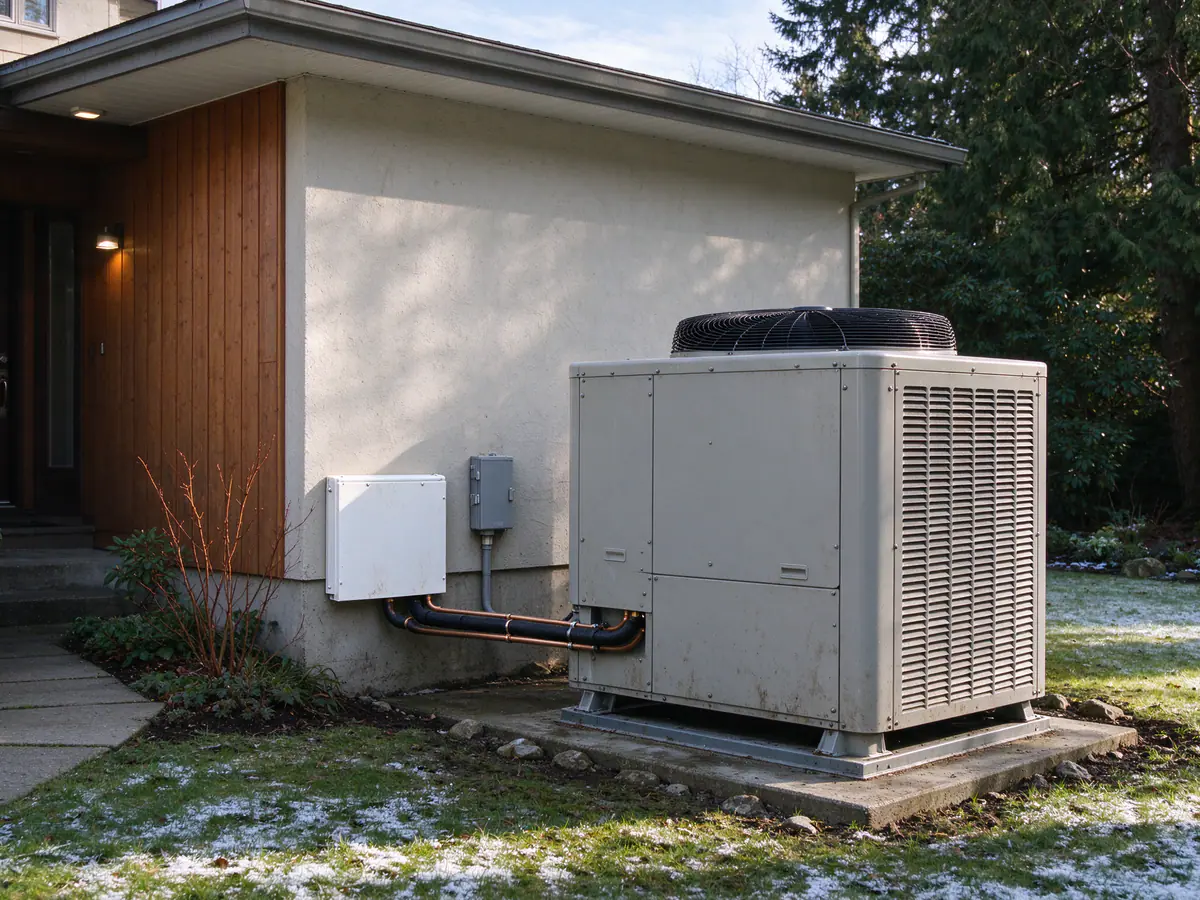
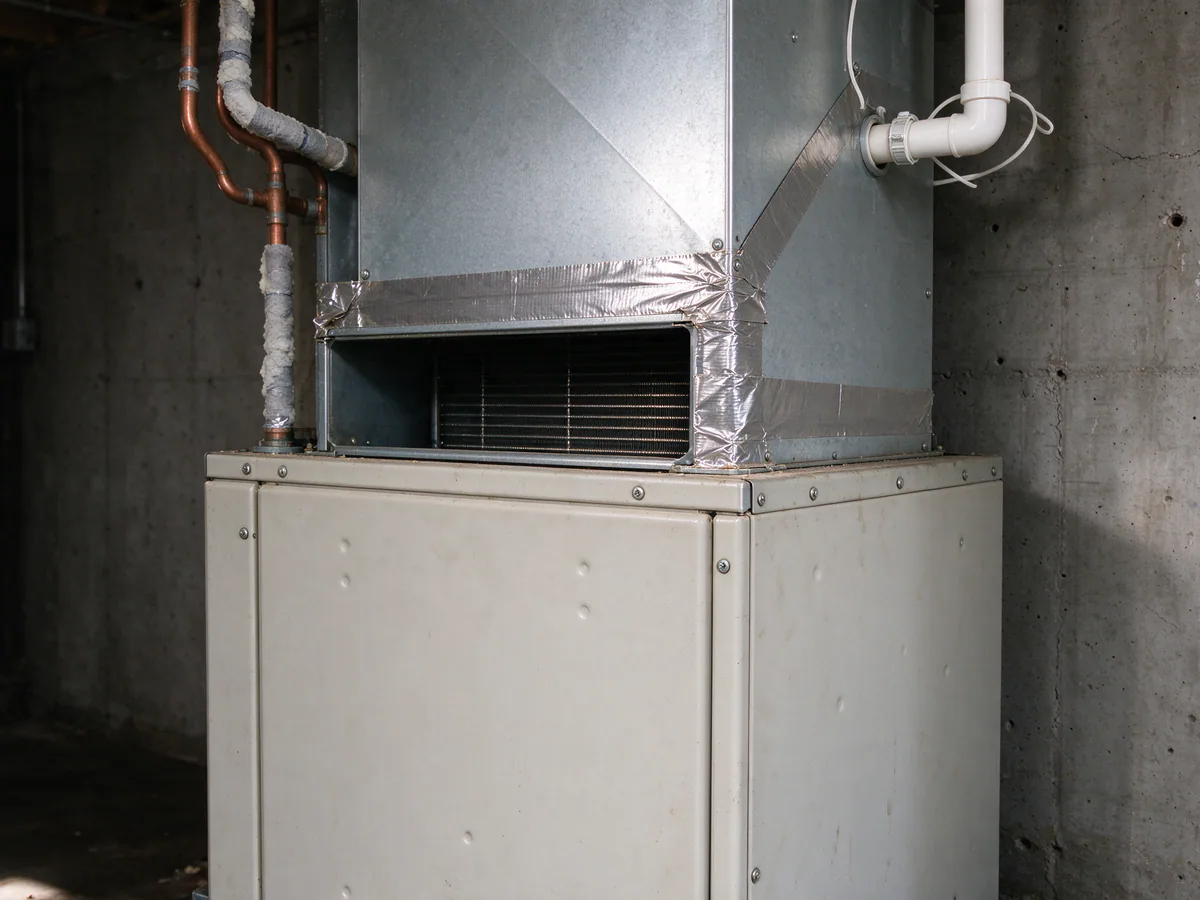
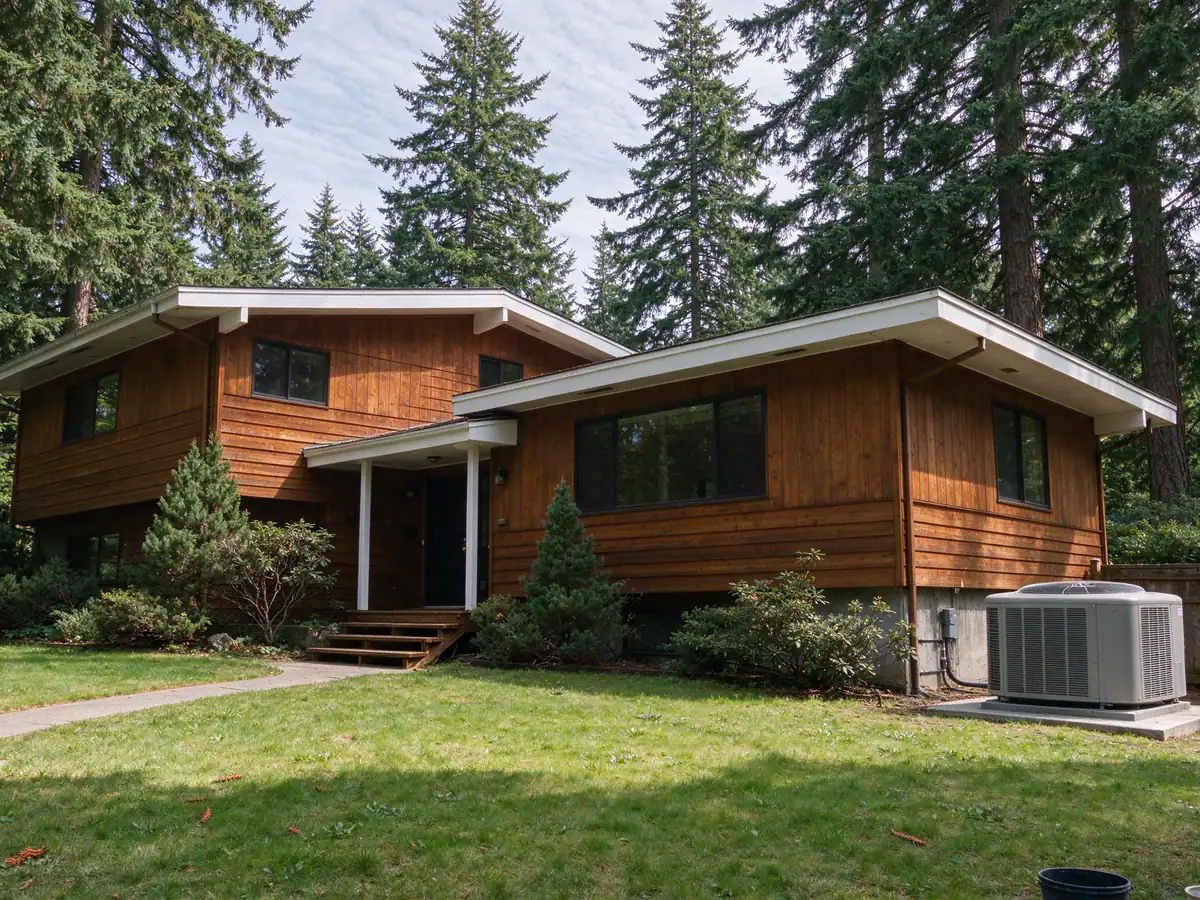
Representative photos of this type of work, not photos of specific completed jobs.
Questions about dual fuel heat pump
What temperature should a dual fuel heat pump switch to the furnace?
There is no single right number. The changeover should sit where the heat pump either can no longer carry the house or costs more to run than the furnace, whichever comes first. On PSE electricity the cost point arrives sooner than on City Light. The equipment's published performance data and your rates set it.
Does the PSE hybrid heat pump rebate apply in Seattle?
No. PSE's hybrid rebate of $1,500, or $2,400 for income-qualified households, requires both PSE gas and PSE electric service. Inside Seattle, City Light sells the electricity, so Seattle homes don't qualify. City Light customers can use its $300 or $600 contractor discount instead.
Can a heat pump coil go on my existing gas furnace?
Often, if the furnace has years left and its blower can move enough air across the coil. The coil must be matched to the outdoor unit and fit the furnace's cabinet and plenum. An old furnace or a weak single-speed blower usually points toward an air handler instead.
Is dual fuel worth it for a City Light customer?
Less often. On City Light's current Seattle rate, a heat pump beats a 95% gas furnace once its COP is about 2.2, which modern units reach in most Seattle winter weather, so the furnace would rarely be the cheaper heat. Dual fuel can still make sense for a newer furnace you would rather not remove.
Does a dual fuel system keep heating when the power goes out?
No. A gas furnace needs electricity for its blower, igniter and controls, so it stops in an outage along with the heat pump. Dual fuel adds fuel flexibility, not outage protection. Heat during outages needs a generator or battery system sized for the furnace or heat pump, which is a separate electrical design.
Related services
Related guides
Set up dual fuel around your ratesTell us your furnace's age and which utility sells your electricity and gas.
Get an Estimate