Service
Heat Pump Replacement in Seattle
Last Updated
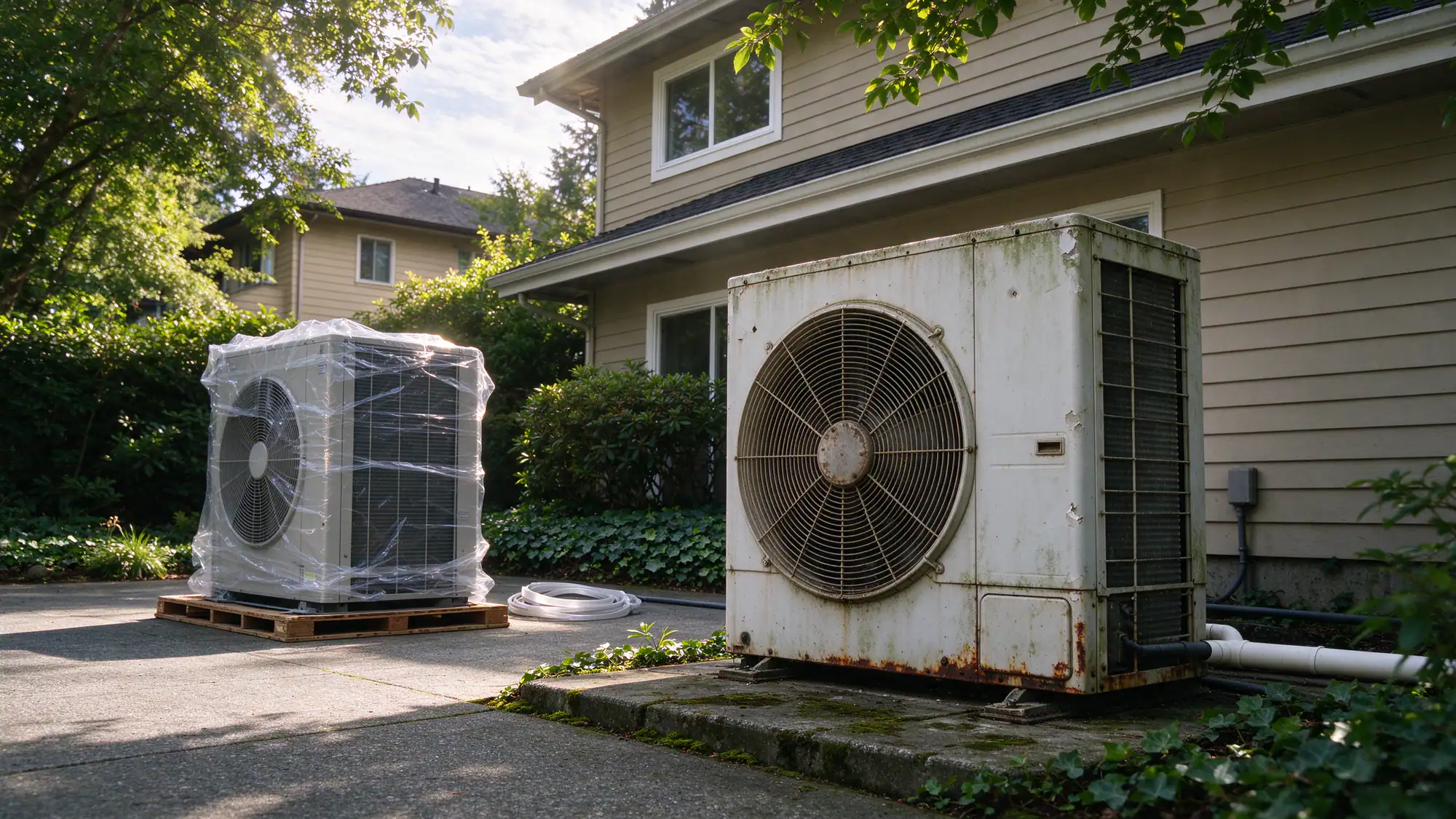
Heat pump replacement means taking out an aging or failed ducted heat pump and installing a new system sized to the house as it is today. The Seattle Heat Pump Company plans heat pump replacements for houses across Seattle and King County, and the work is carried out by licensed and insured contractors. In Washington, a replacement today is rarely a simple swap, because new equipment must use a lower-impact refrigerant.
That refrigerant change touches the indoor coil, the line set and the commissioning steps, not just the box in the yard. It is also a good moment to fix what the old system got wrong, because a replacement copied from the old nameplate repeats every sizing and airflow mistake that came with it.
What happens on the first visit
A replacement visit starts with the system you already have, then measures the house around it.
The existing equipment. Model and serial numbers on the outdoor unit, the indoor coil and the air handler or furnace tell us the refrigerant, the original capacity and roughly when the system went in. Service records, if you have them, show whether the system has needed refrigerant added, which points to a leak somewhere in the coil or lines.
The house as it is now. A fresh Manual J load calculation replaces the old equipment’s capacity as the sizing guide. New windows, attic insulation or air sealing since the original install can shrink the load, and Seattle’s energy code requires equipment no larger than the smallest size that meets it.
The ducts. A static pressure reading with the blower running shows whether the ducts let the system move the air it needs. A heat pump that always struggled on the far rooms may have had a duct problem rather than an equipment problem, and new equipment will not fix that on its own. The existing ductwork page explains what the measurements show.
The line set, electrical and yard. The route, diameter and condition of the refrigerant lines decide whether they can be reused. The circuit and breaker have to match the new unit’s nameplate. In Seattle, an outdoor unit in a side yard needs a noise review, so the old location is checked against the city’s noise limits rather than assumed to be fine.
Repair or replace: keeping the two decisions apart
Repair and replacement answer different questions, and mixing them up is how homeowners end up paying for the wrong one. This page is about replacement. A repair diagnosis looks at what failed; a replacement plan looks at the whole system and the house.
Repair is usually the reasonable call when a single part has failed on a system that has kept the house comfortable: a capacitor, a contactor, a fan motor, a sensor or a control board. Those parts fail on otherwise healthy equipment, and replacing one does not change how the system was sized or how the ducts perform.
Replacement starts to make more sense when the failure is expensive and the system is old, when the same refrigerant leak keeps coming back, or when the system never kept the house comfortable in the first place. A failed compressor on an older R-410A system is the classic case. The last situation needs particular care, because symptoms like cold rooms, long run times and heavy backup heat use can come from undersizing, oversizing, poor airflow or bad thermostat setup. Replacing the equipment without finding the cause leaves the cause in place.
How long a heat pump lasts
There is no single reliable lifespan figure for a heat pump, and age by itself does not decide anything. Two systems installed the same year can be in very different shape. What shortens service life is consistent: oversizing that makes the compressor short-cycle, restricted airflow that strains the blower and coil, dirty filters and coils, and repeated refrigerant leaks. Houses near Puget Sound add salt air to that list. Carrier advises washing coastal outdoor units about every three months, and Mitsubishi Electric offers coil coatings and seacoast packages on some models. The heat pump maintenance guide covers the habits that keep a new system healthy.
The refrigerant change and what it means for your replacement
Since January 1, 2026, Washington’s Department of Ecology has required newly installed residential heat pumps and air conditioners to use refrigerants with a global warming potential below 750. R-410A, which most existing systems use, does not meet that limit. Replacement equipment now runs on newer refrigerants such as R-454B or R-32, which are classed A2L, meaning mildly flammable.
The rule does not force anyone to remove a working R-410A system. It matters at replacement time, in three practical ways.
The indoor coil has to match
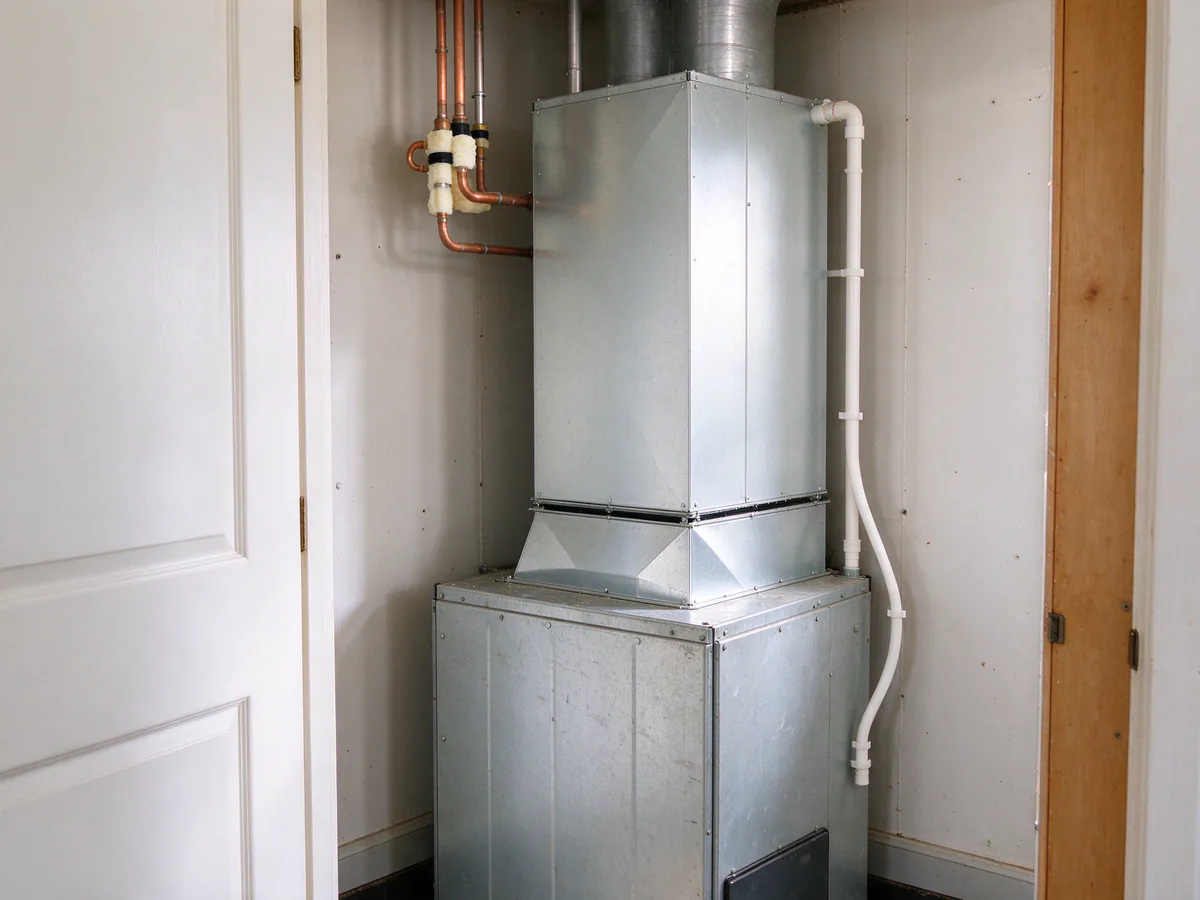
A heat pump’s efficiency rating belongs to a specific outdoor unit paired with a specific indoor coil, listed together as a matched system. The coil’s metering device and circuiting are designed for one refrigerant. An old R-410A coil on a new A2L outdoor unit is a mismatch that will not carry a valid rating, and City Light’s contractor discount depends on rated SEER2 and HSPF2 numbers. So a replacement nearly always includes a new coil on the furnace or a new air handler, and the air handler replacement page covers that half of the job. A new coil can also be taller or wider than the old one, which can mean changes to the plenum or the transition above the furnace.
Line set reuse is a tested decision
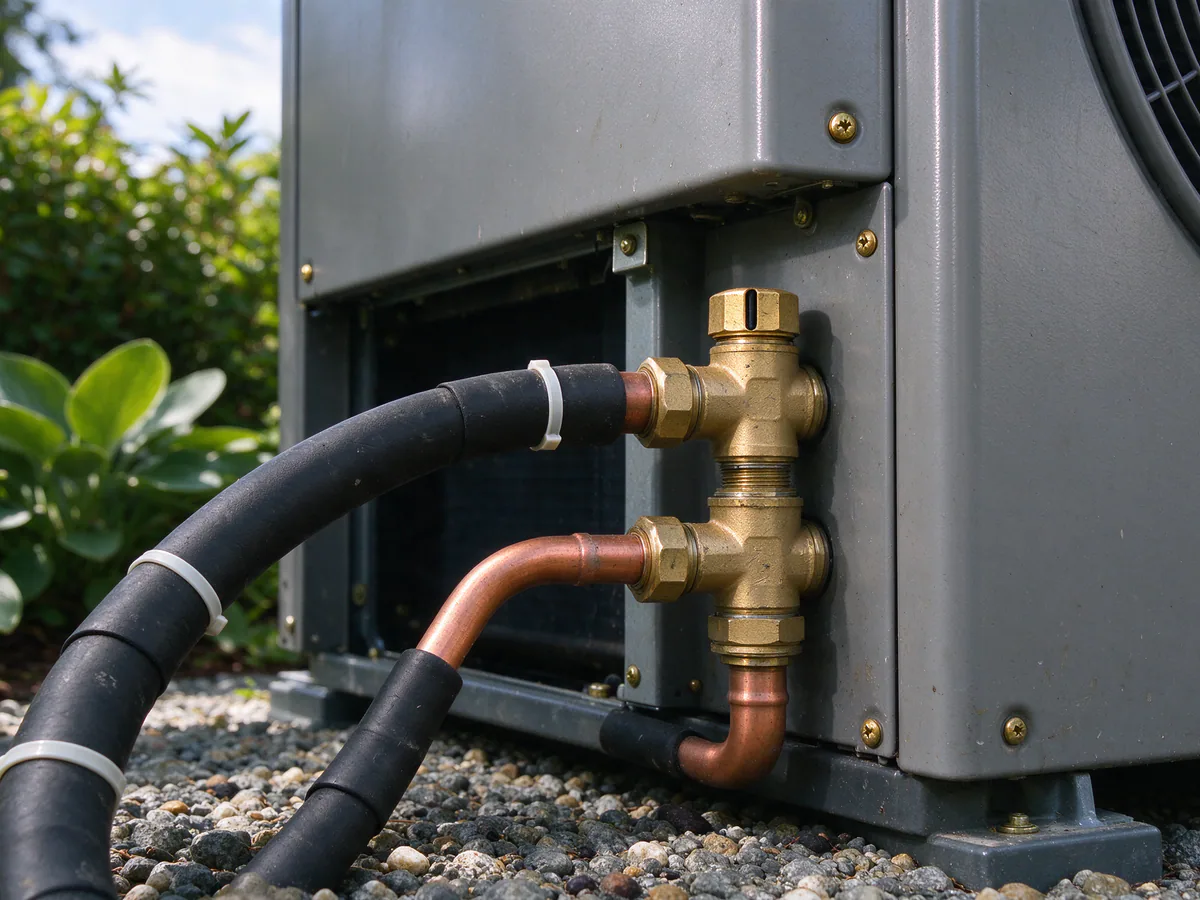
The refrigerant line set runs between the outdoor unit and the indoor coil, often through walls, floors or a finished basement. Reusing it can save real labor and patching, so it is worth testing rather than replacing by habit. The questions are specific:
- Are the line diameters and the total length within the new unit’s installation limits?
- Is the copper free of kinks, crushed sections and corrosion, and is the insulation intact?
- Did the old system fail in a way that contaminates the lines, such as a compressor burnout that leaves acid and debris behind?
- Do any joints or flare fittings conflict with the manufacturer’s instructions for A2L equipment?
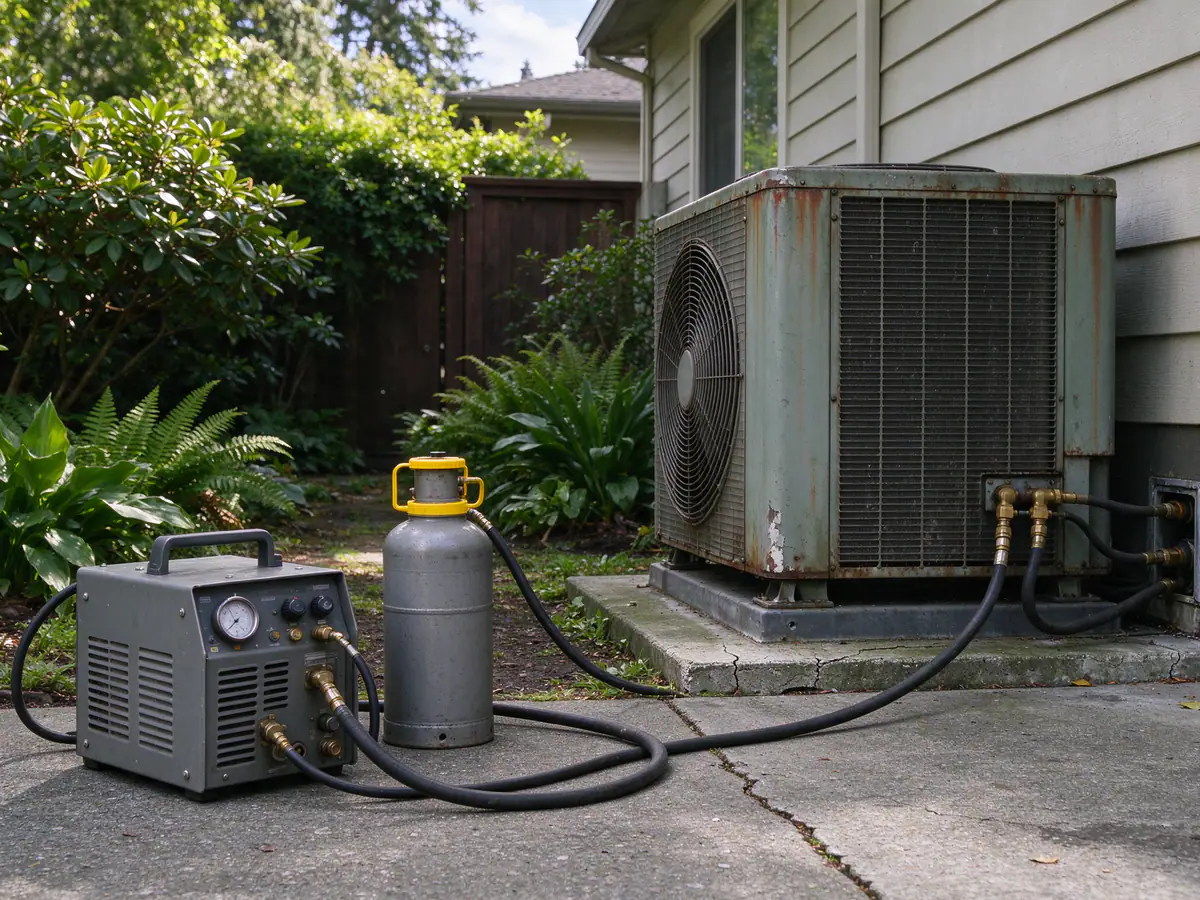
If the answers hold up, the lines are cleaned as the manufacturer directs, pressure tested with nitrogen and pulled to a deep vacuum measured with a micron gauge. If they fail any step, new lines go in. The refrigerant change guide explains the A2L handling rules in more detail.
Leak detection and controls
Many A2L indoor units include a refrigerant sensor that runs the blower to disperse refrigerant if a leak is detected. That sensor has to be wired and the controls set up for it, which is one more reason the thermostat and control wiring are part of the replacement scope rather than an afterthought.
Size the replacement, don’t copy the nameplate
The most common replacement mistake is matching the old unit’s tonnage. The original system may have been sized by rule of thumb, or oversized to cover leaky ducts, and the house may have changed since. Seattle’s heating design temperature is 24°F and its cooling design temperature is 83°F, from the city’s energy code tables, and the new system is selected for both.
A replacement is also the moment to choose the compressor type. Variable-speed equipment runs at low output most of the time, which suits Seattle’s long, mild heating season and handles summer humidity better than a single-stage unit that cycles on and off. The variable-speed comparison and the SEER2 and HSPF2 guide explain what the ratings mean for your bill, and the sizing guide walks through the load numbers.
Find out what size the house needs nowA fresh load calculation and a duct test show whether the old size was ever right.
Get an EstimateWhat a replacement costs, and what lowers it
A like-for-like heat pump replacement on usable ducts typically runs about $6,700 to $15,000 for Seattle-area projects, as, a budgeting range, not a quote. National cost guides put an air-source heat pump on existing ducts at roughly $4,000 to $12,000 (HomeGuide). The price moves with a short list of drivers:
- capacity and efficiency tier of the new equipment
- a new coil on the furnace versus a new air handler, which alone runs about $1,500 to $4,200 in national figures (HomeGuide and Carrier)
- whether the line set can be reused or has to be replaced, and how hard the route is
- electrical changes if the new unit needs a different circuit or the panel is full
- a heat pump compatible thermostat, about $200 to $500 installed in national figures (HomeGuide)
- duct corrections the old system needed, which take a project above the like-for-like range
Seattle permit fees for a typical job run about $192 to $556, depending on whether the indoor equipment changes and whether the electrical service is upgraded.
Seattle City Light offers a contractor discount of $300 on qualifying retrofit equipment rated at least SEER2 15.2 and HSPF2 8.1, or $600 at SEER2 16.0 and HSPF2 9.5, one system per home, applied through participating distributors and contractors. City Light strongly recommends the discount be passed through to the customer, so ask to see it on the invoice. The Seattle rebate guide tracks the current terms. The federal 25C tax credit ended for equipment placed in service after December 31, 2025. The replacement cost guide breaks down each driver, and the cost estimator gives a range for your house.
Timing, permits and the Seattle details
Replacing a heat pump before it fails gives you time to compare options. Demand jumps after a heat wave and at the first hard freeze, which can stretch lead times, and the June 2021 heat dome, when Sea-Tac reached 108°F, showed how quickly that happens. If the old system still runs, spring and early fall leave more room to plan.
In Seattle, a split heat pump replacement needs a refrigeration permit, which only a licensed refrigeration contractor can obtain. A furnace or mechanical permit applies when the indoor equipment changes, and an electrical permit applies when the circuit or service changes. Bellevue requires a mechanical permit to install or replace a heat pump. The permit guide covers who pulls each one.
If the replacement grows into a bigger change, such as dropping the gas furnace or adding a heat pump to one, the furnace to heat pump conversion and dual fuel heat pump pages cover those decisions.
What's included
- Fresh heating and cooling load calculation for the house as it is now
- Review of the existing system's model numbers, refrigerant and service history
- Duct static pressure check before the new equipment is chosen
- Line set inspection, with a reuse or replace decision based on testing
- Outdoor unit and indoor coil or air handler rated as a matched system
- Recovery of the old refrigerant and removal of the old equipment
- Electrical check of the circuit, breaker and disconnect for the new unit
- Thermostat set up for the new equipment's staging and backup lockout
- Permits, inspections and startup commissioning
Three common shapes of a heat pump replacement
| Outdoor unit and matched coil | Outdoor unit and new air handler | Replacement plus corrections | |
|---|---|---|---|
| What changes | New outdoor unit and a new coil on the existing furnace or in the existing cabinet | New outdoor unit and a new electric air handler with its own coil and blower | Either of the first two, plus duct, return or electrical fixes the old system never had |
| Typical situation | Dual fuel system whose furnace still has years left | Air handler that is old, undersized for the new unit or not rated for the new refrigerant | A system that never kept every room comfortable, so a like-for-like swap would repeat the problem |
| What the assessment checks | Coil fit on the furnace, blower capacity, line set condition | Air handler location, backup heat size, panel capacity | Static pressure, return area, sizing against the current load |
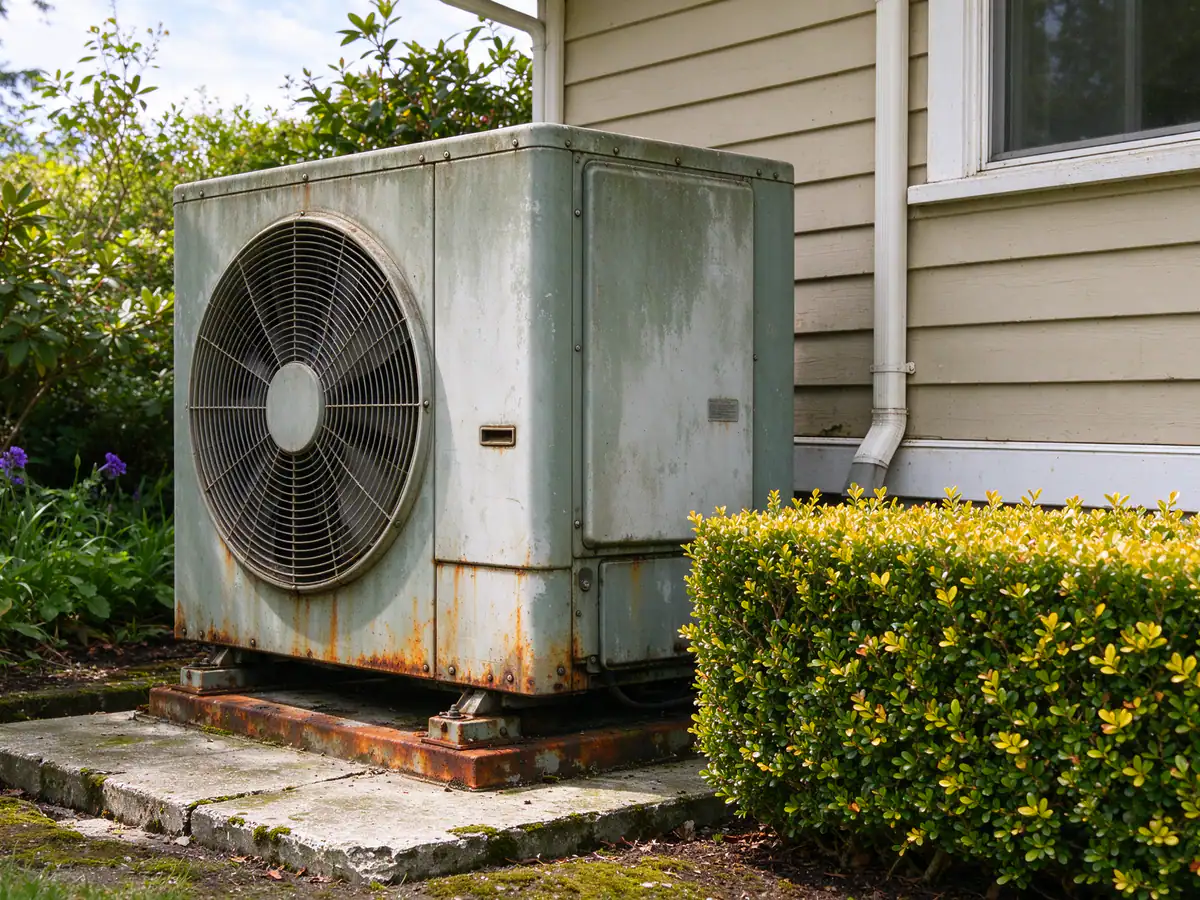
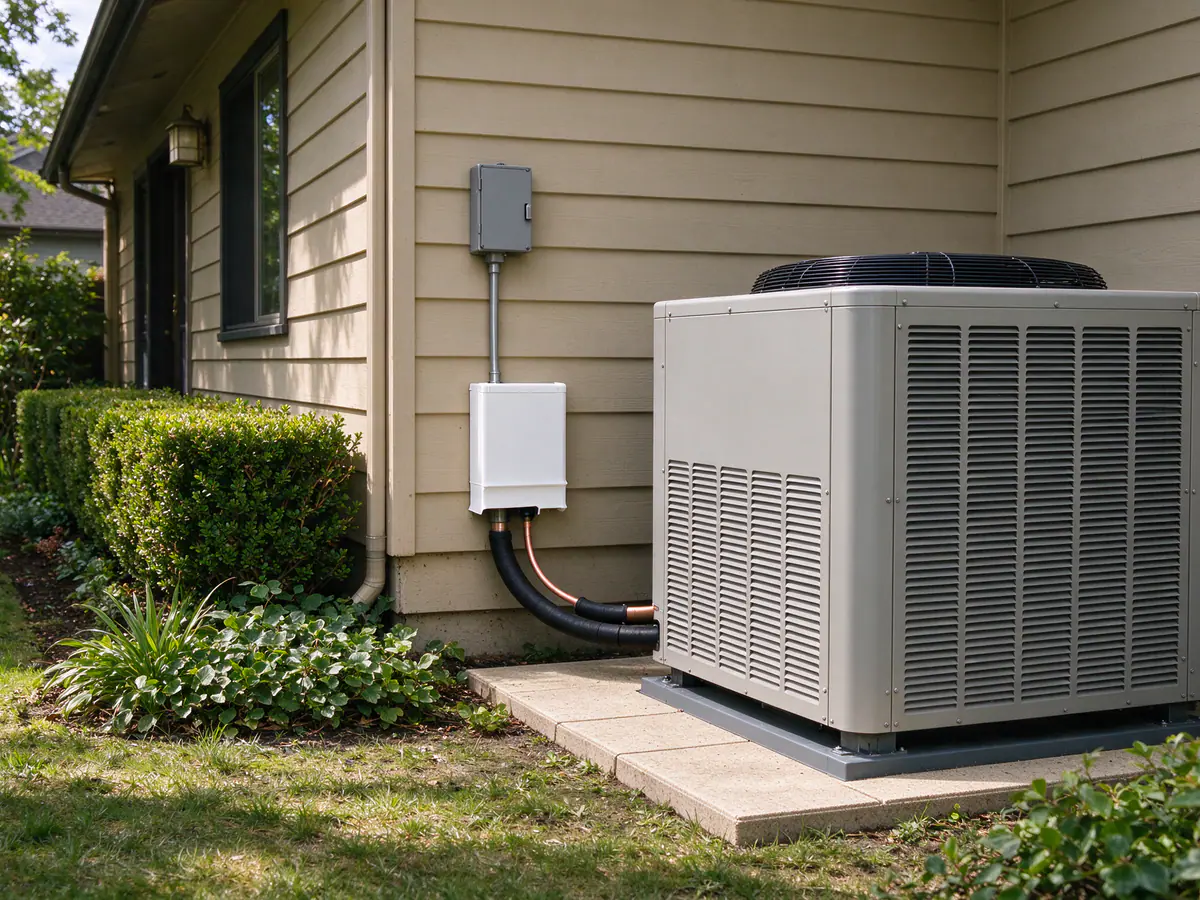
Representative photos
Representative photos of this type of work, not photos of specific completed jobs.
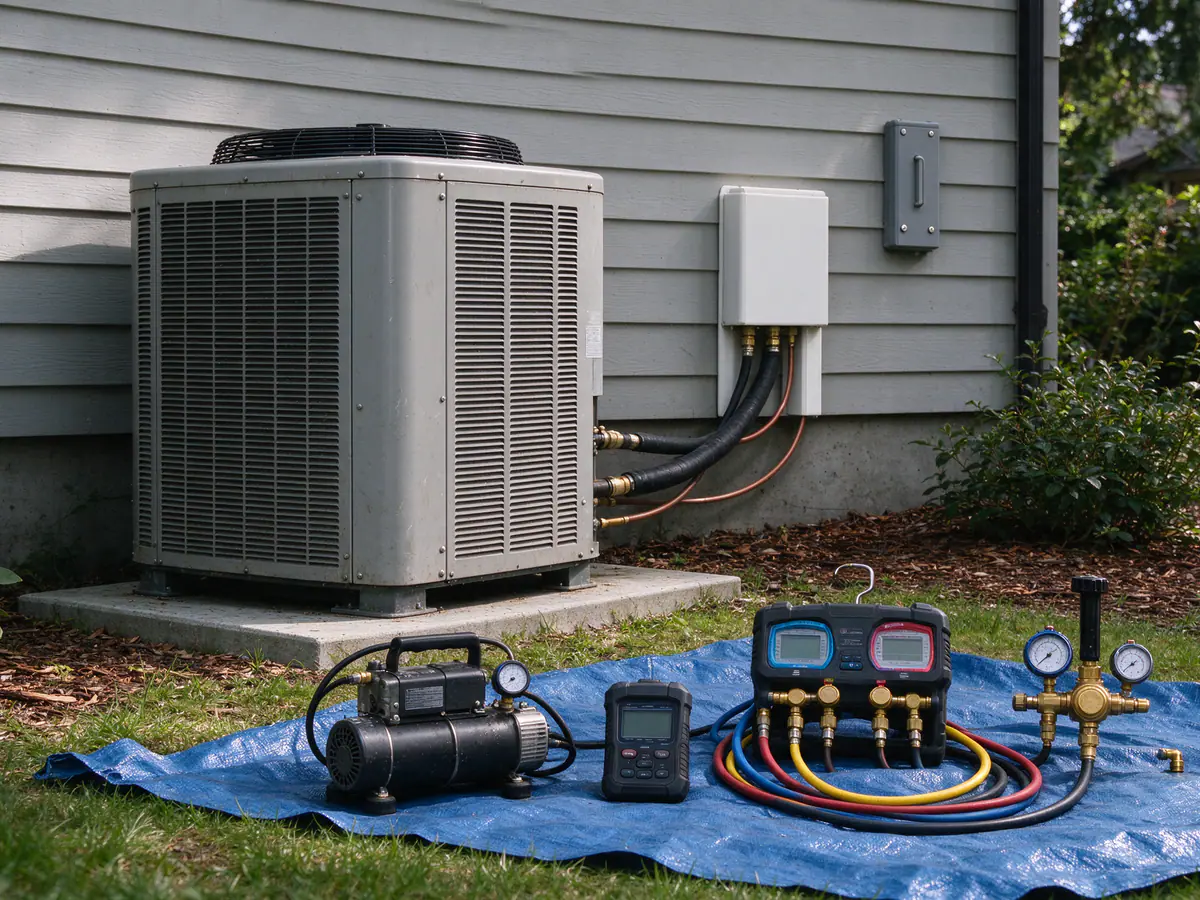
Before and after (representative)
Questions about heat pump replacement
Can I replace just the outdoor unit of my heat pump?
Usually not anymore. Since January 1, 2026, newly installed heat pumps in Washington must use a refrigerant with a global warming potential under 750, and the outdoor unit has to be paired with an indoor coil rated for that refrigerant. An existing R-410A coil does not qualify, so most replacements change both halves of the system.
Can my old refrigerant line set be reused?
Sometimes. Reuse depends on whether the line diameters and length suit the new unit, whether the copper and insulation are sound, and whether the old system failed in a way that contaminated the lines. Reuse should follow a nitrogen pressure test and a deep vacuum, not a visual check alone.
Do I have to replace my R-410A heat pump now?
No. Washington's refrigerant rule applies to newly installed equipment, not to systems already running. A working R-410A heat pump can stay in service. The rule matters when you replace it, because the new system will use a different refrigerant and usually a new indoor coil.
How do I know whether to repair or replace my heat pump?
Start with what failed and how the system has performed. A single failed part on a system that has kept the house comfortable often points to repair. A failed compressor, repeated refrigerant leaks or rooms that never heated properly point toward replacement, and the last case also needs a sizing and duct check.
Will a new heat pump lower my electric bill?
It can, but no one can promise a figure. Newer variable-speed equipment uses less electricity for the same heat, especially if the old system leaned on resistance backup heat. The size of any change depends on the old system's efficiency, your utility rate, the ducts and how the controls are set.
Related services
Related guides
Plan the replacement before the old unit decides for youSend the model number on the outdoor unit and tell us how the house has been heating.
Get an Estimate