Service Area
Heat Pumps for Pre-War Houses in Wallingford, Fremont and Green Lake, WA
Last Updated
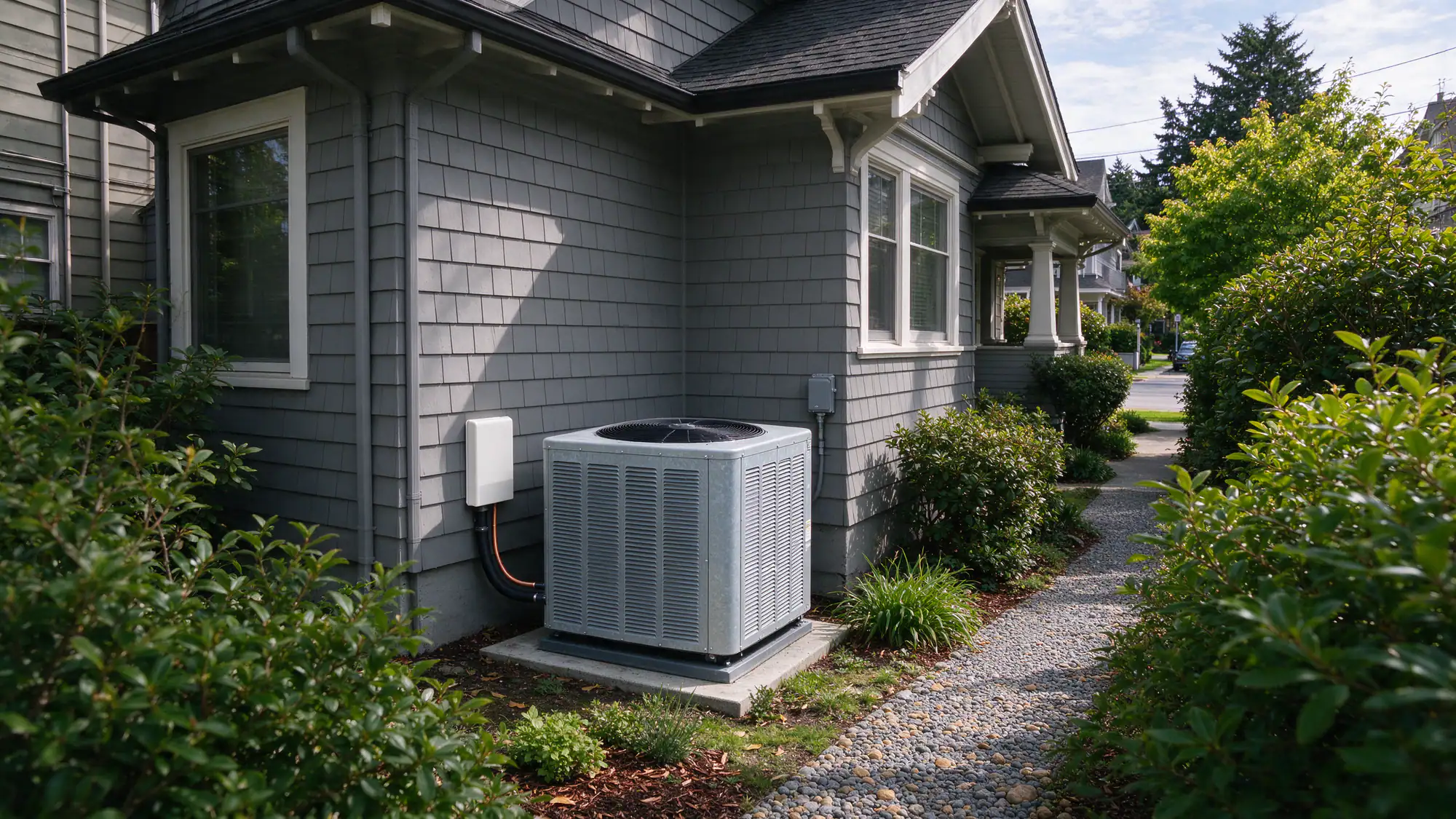
In Wallingford, Fremont, Phinney Ridge and Green Lake, a heat pump project usually starts with an older question than equipment: can this house carry ducted air at all, and if not, where would new ducts go? The Seattle Heat Pump Company plans ducted heat pumps for the pre-war houses of North Central Seattle, from the blocks off N 45th Street to Tangletown and the slopes above Green Lake, with installation by licensed and insured contractors.
The housing explains the question. About 36% of homes in the district were built before 1940, the second-oldest share in Seattle after Capitol Hill, by Census counts. Yet the area is busy: over the latest three years of records it filed 1,797 single-family heat pump trade permits in City of Seattle open data, and Wallingford’s 677 were the most of any single Seattle neighborhood.
Fewer ducted jobs, and why that matters
Only about 22% of those permits named ducted equipment, compared with about 31% in Northeast Seattle. The permit descriptions often say nothing about ducts either way, so the real ducted share is higher than the count shows. The gap is still telling. In Fremont, 41 of 320 permits named ducted equipment; on Phinney Ridge it was 128 of 505.
A low ducted share in a district of old houses fits a simple mechanism. Many pre-war homes were built before forced-air furnaces were common. Some had early furnaces with large ducts laid out for warm air rising by gravity, some had radiators or stoves, and many have been converted more than once since. Seattle has no survey of how many original duct systems survive, so each house is judged on what is actually in the basement and walls.
That makes the assessment the most important step in this district. The heat pumps for older homes page covers the full range of situations, from a 1920s furnace system worth saving to a house with no ducts at all.
Three starting points for a pre-war house
A working forced-air system
Where a gas furnace already heats the house through ducts, the path looks like any other furnace to heat pump conversion. About 40% of district households heat with gas. The ducts still get a static pressure test, because a heat pump needs more airflow than the furnace it replaces, and old houses often have a single return in a hallway that cannot draw enough air. Adding a return in a bedroom wing or upsizing the central one is a common fix. See using a heat pump with existing ductwork for how those readings are interpreted.
Large old ducts from an early furnace
Oversized round ducts and floor grates suggest a gravity-era system. These ducts can sometimes be reused because their size works in a heat pump’s favor, but they were never designed for a blower. Leaky seams, sharp transitions and missing returns are the usual problems. The design typically keeps the sound trunks, seals or replaces the worst runs and adds a proper return path. Old duct wrap is also where asbestos turns up, and Puget Sound Clean Air Agency requires a survey before it is disturbed.
No ducts at all
A house heated by baseboards, radiators or a wall furnace needs new ductwork for a ducted heat pump. Whether that is practical depends on the building. A full basement can hold the air handler and the main trunk, and an attic with headroom can feed the upstairs. Branch runs reach second-floor rooms through closets or chases. Where that space does not exist, the honest answer may be a ductless system, and ducted vs ductless heat pumps sets out how to compare them. National cost guides put whole-house duct replacement at about $1,400 to $5,600 (HomeGuide), and Fixr’s figures run from about $1,900 to about $17,100 for complex installs, so the duct scope can matter as much as the equipment.
Sizing an old house honestly
Old houses tempt oversizing because they feel drafty. Seattle’s energy code requires the opposite discipline: a room-by-room ACCA Manual J load for a 24°F design day and equipment no larger than needed to meet it. A Phinney Ridge Craftsman that has had attic insulation and new windows can need far less capacity than its age suggests, while one with original single-pane glass and open balloon-frame walls needs more. Oversized equipment short-cycles, controls humidity poorly in summer and pushes more air than old ducts can handle quietly. The Manual J sizing guide explains the inputs.
Side yards and the noise review
Wallingford and Fremont lots are often narrow, with houses close to the line on both sides. Seattle measures heat pump noise at the property line: 55 dBA by day and 45 dBA at night, with night running from 10pm to 7am on weekdays and to 9am on weekends and holidays. A heat pump runs through winter nights, so the night limit is the one that counts.
SDCI’s guidance identifies minimum side yards of about three feet as the usual problem. Equipment in a side yard goes through a noise review, and a predicted level of 47 dBA or less on the unit’s heating sound rating passes. Above that, the choices are a quieter model, a sound barrier, a compressor blanket or a different location. Rear yards and front yards are the recommended spots when they work. The Seattle noise ordinance guide walks through the calculation, and it is worth settling before equipment is chosen, because the quietest model that fits a side yard may differ from the one a rear-yard plan would pick.
Permits, panels and cooling
Inside Seattle, a split system needs a refrigeration permit, which only a licensed refrigeration contractor can obtain, plus an electrical permit and a furnace or mechanical permit when the indoor equipment changes. Typical current SDCI fees for a job run about $192 to $556. Older houses in the district may still have smaller electrical services. A heat pump circuit often fits, but electric backup heat may not, and a 100A to 200A upgrade typically adds about $1,333 to $4,500 in the Seattle area.
Cooling is often what finally prompts the project. Pre-war houses with plaster walls hold heat during long warm spells, and Sea-Tac’s cooling degree days have roughly doubled since the 1990s. A ducted heat pump delivers that cooling through the same system, which is the case made on our central air alternative page. Running costs favor it as well: on City Light’s current Seattle rate of 13.38 cents per kWh, a heat pump beats a 95% efficient gas furnace once it averages a coefficient of performance of about 2.2.
For neighbors across Aurora Avenue, see Ballard and Greenwood and Northwest Seattle; east of I-5, Northeast Seattle has a much higher ducted share.
Around Wallingford, Fremont & Green Lake
Neighborhoods
- Wallingford
- Phinney Ridge
- Fremont
- Green Lake
- Tangletown
- Green Lake Park
- Gas Works Park
- Woodland Park Zoo
- Fremont Troll
- I-5
- SR 99 / Aurora Ave N
- N 45th St
- Stone Way N
- N 50th St
- Seattle City Light (electric), PSE (gas)
- Seattle Department of Construction & Inspections
Services in Wallingford, Fremont & Green Lake
Wallingford, Fremont & Green Lake heat pump questions
What does a heat pump cost in a Wallingford Craftsman?
Seattle-area ducted heat pumps on usable ducts typically run about $6,700 to $20,000, and that range applies here too. Older houses move toward the top or past it when ducts need rework. National cost guides put whole-house duct replacement at about $1,400 to $5,600 (HomeGuide), and complex installs can run far higher. These are budgeting ranges, not quotes.
My 1920s house has big floor grates and old round ducts. Can a heat pump use them?
Sometimes, but it takes measurement to know. Ducts from an early furnace can be large enough, yet they were laid out for warm air rising on its own rather than for a blower. The assessment checks size, leakage, return path and whether the runs can be connected to a modern air handler. Some sections are reused and others replaced.
My side yard is only about three feet wide. Can the outdoor unit go there?
It can, if it passes Seattle's noise review. SDCI accepts a side-yard unit when the predicted level at the property line is 47 dBA or less on the heating rating. If a model predicts higher, the options are a quieter unit, a sound barrier, a compressor blanket or moving the unit to the rear yard.
Do I need an asbestos survey before old ducts come out?
Puget Sound Clean Air Agency requires an asbestos survey before renovation, and that includes removing old duct wrap or a furnace. Owner-occupants of a single-family house may survey their own home. If asbestos is found, removal follows the agency's notification rules before the duct work proceeds.
Is it better to go ductless in an old house with no usable ducts?
It depends on the floor plan and on where new ducts could run. A basement and an attic with room for trunks make a ducted retrofit practical. Where neither exists, ductless heads can be simpler. Our ducted vs ductless guide compares the trade-offs; we plan ducted systems and say so when a house is a poor fit.
Related guides
Nearby service areas
Plan a heat pump for your Wallingford or Green Lake houseTell us about the house and the system you have now.
Get an Estimate