Service Area
Heat Pump Installation in Northeast Seattle, WA
Last Updated
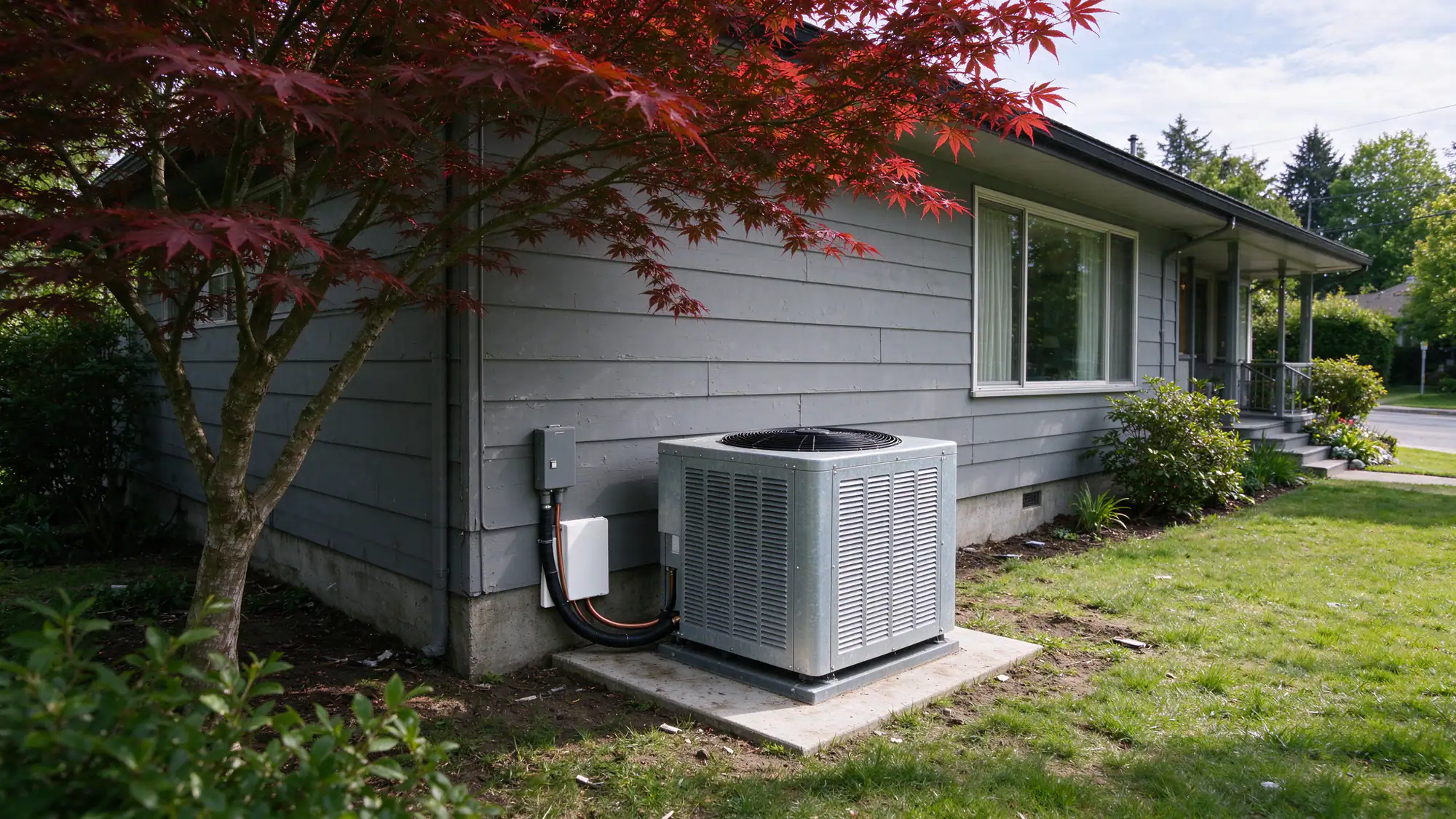
Heat pump installation in Northeast Seattle mostly means one thing: replacing a mid-century furnace with a ducted heat pump on the ducts the house already has. The Seattle Heat Pump Company plans and manages ducted heat pump projects across Ravenna, Wedgwood, View Ridge, Bryant, Roosevelt and Laurelhurst, with the work carried out by licensed and insured contractors.
Over the latest three years of records, Northeast Seattle filed more single-family heat pump trade permits than any other part of the city: 2,320 by City of Seattle open data, or about 157 for every 1,000 one- and two-unit homes. It also had the highest share of permits that mention ducted equipment, about 31%. That pattern fits the housing.
What the housing means for a heat pump
About 60% of Northeast Seattle’s homes were built before 1960, the highest share of any Seattle district in Census data, and the median home dates from the 1950s. Another quarter predate 1940. Many of those houses were built around a central furnace and a duct system, which makes a ducted heat pump a natural replacement rather than a retrofit from scratch.
That head start comes with caveats. Ducts installed for a 1950s furnace were sized for hot supply air and often have one central return. A heat pump moves more air to deliver the same heat, so the return side is where these systems most often come up short. Leaky joints in daylight basements and crawlspaces add to it. None of this is a reason to skip ducts; it is a reason to measure them before choosing equipment.
The district also has the largest share of oil-heated households in the city, about 6.8% or roughly 1,255 homes in Census estimates. The ZIP code that covers Ravenna, Wedgwood and View Ridge, 98115, led Seattle in residential oil tank decommissioning permits since 2021, with 992 filed. When an oil furnace comes out, the heat pump goes in on the existing ducts and the tank gets decommissioned under a Seattle Fire Department permit, usually as one coordinated project.
Common reasons Northeast Seattle owners look at heat pumps
The oil furnace is near the end. An oil-to-heat-pump conversion replaces the burner and furnace with an air handler or a heat pump coil, connects a new outdoor unit, and handles the tank. Seattle Clean Heat’s $2,000 rebate applies to qualifying equipment installed by a participating contractor. See oil to heat pump conversion and oil tank decommissioning.
Gas furnace, no air conditioning. About half of Northeast Seattle households heat with gas. Adding a heat pump brings cooling for the first time and moves most of the heating onto City Light electricity. See furnace to heat pump conversion.
Some rooms never get warm. In a split-level or a house with an added room, the far end of the duct system often struggles. That is a duct question first, and using a heat pump with existing ductwork covers how it gets measured.
How a Northeast Seattle job usually runs
The assessment starts with the load calculation. Seattle’s energy code requires heating and cooling loads calculated with ACCA Manual J for a 24°F design day, and equipment sized to meet that load without oversizing. Many Northeast Seattle houses have had new windows, attic insulation or a finished basement since the original furnace went in, so the right heat pump is often smaller than the old furnace’s rating suggests.
Next come the ducts: a static pressure test with the blower running, a look at the return path, and an inspection of exposed runs in the basement or crawlspace. Then the electrical panel. Older services can handle a heat pump circuit, but electric backup heat changes the math, so the design accounts for both.
The outdoor unit location is set with Seattle’s noise limits in mind. A rear-yard pad usually clears the limit easily, while a side-yard location triggers Seattle’s noise review, so lot width often decides where the unit goes.
In Seattle, the split system needs a refrigeration permit pulled by a licensed refrigeration contractor, plus an electrical permit. Tank decommissioning runs on its own Seattle Fire Department permit and an ICC-certified decommissioner. After installation, commissioning verifies airflow, charge, defrost and the backup heat lockout before the system is handed over.
Local conditions that shape the design
Northeast Seattle runs from the I-5 corridor east to Lake Washington, from the flats around Roosevelt to the slopes above the lake in Laurelhurst and along Sand Point Way NE. The house itself decides the installation details. Where there is a daylight basement, it usually offers a clean route for refrigerant lines and a dry, accessible spot for the air handler. Where the ductwork runs through a crawlspace, it is easy to inspect and seal, but it also loses more heat when it leaks, so sealing is often part of the scope.
The climate is Sea-Tac’s: about 25 nights a year at or below freezing, roughly one night a year at 20°F or colder, and long wet stretches in the 30s and 40s when frost builds on the outdoor coil and the unit defrosts more often. A properly sized heat pump handles that without drama. What it does not tolerate well is restricted airflow, which is why the duct work above matters more here than the equipment brand.
Summers have changed too. Cooling degree days at Sea-Tac roughly doubled from the 1990s to the last decade, and the American Housing Survey found that only about 53% of Seattle-area homes had a primary air conditioning source in 2021. A heat pump on the existing ducts adds cooling without a separate AC system.
Why the City Light math favors heat pumps here
Northeast Seattle buys electricity from Seattle City Light at 13.38 cents per kWh, and gas from PSE. At those rates, a heat pump beats a 95% efficient gas furnace on energy cost once it averages a coefficient of performance of about 2.2, which a modern unit clears through most of a Seattle winter. For most houses here, that tips the decision toward an all-electric heat pump over a dual fuel setup that keeps gas as backup. City Light’s contractor discounts of $300 or $600 on qualifying equipment apply. The Seattle rebate guide keeps the current amounts in one place.
Around Northeast Seattle
Neighborhoods
- Ravenna
- Wedgwood
- View Ridge
- Bryant
- Roosevelt
- Laurelhurst
- Windermere
- Hawthorne Hills
- Magnuson Park and Sand Point
- Ravenna Park
- University Village
- Laurelhurst Park
- I-5
- NE 65th St
- 35th Ave NE
- Sand Point Way NE
- NE 45th St
- Seattle City Light (electric), PSE (gas)
- Seattle Department of Construction & Inspections
Services in Northeast Seattle
Northeast Seattle heat pump questions
How much does a ducted heat pump cost in Northeast Seattle?
Seattle-area projects on usable existing ducts typically run about $6,700 to $20,000. Northeast Seattle houses don't carry a separate price band; the spread comes from the house. An oil conversion adds tank decommissioning, roughly $700 to $3,000 to fill a clean tank in place plus a $184 fire permit, and a panel upgrade adds more.
My house has a 1950s forced-air furnace. Can a heat pump use the same ducts?
Often, and that is one reason so many Northeast Seattle conversions are ducted. The ducts still need a static pressure test, because a heat pump needs more airflow than the furnace did. Small or single returns are the most common limit in houses of that era and are usually fixable without replacing the whole system.
Do Northeast Seattle homes qualify for the Seattle Clean Heat oil rebate?
Homes inside Seattle city limits that heat with oil can, which covers the Northeast neighborhoods. The program takes $2,000 off a qualifying conversion, with $4,000 more for moderate-income households within the program's current funding period. The tank has to be decommissioned under Seattle Fire Department rules as part of the job.
Is there a tank record for my house?
Seattle Fire Department publishes residential tank decommissioning records from 1996 on, searchable by address. If a previous owner decommissioned the tank, the record shows whether it was removed or filled in place. No record can mean the tank is still active or was handled before 1996, so a tank search is worth doing before a sale or conversion.
Will the outdoor unit fit in a narrow side yard?
Usually, with planning. Seattle limits residential noise to 45 dBA at the property line at night, and side-yard equipment gets a noise review. A predicted level of 47 dBA or less on the heating rating passes. Otherwise the options are a quieter model, a sound barrier, a compressor blanket or a rear-yard location.
Related guides
Nearby service areas
Plan a heat pump for your Northeast Seattle houseTell us about the house and the system you have now.
Get an Estimate