Service Area
Heat Pump and Dual Fuel Installation in Kirkland & Redmond, WA
Last Updated
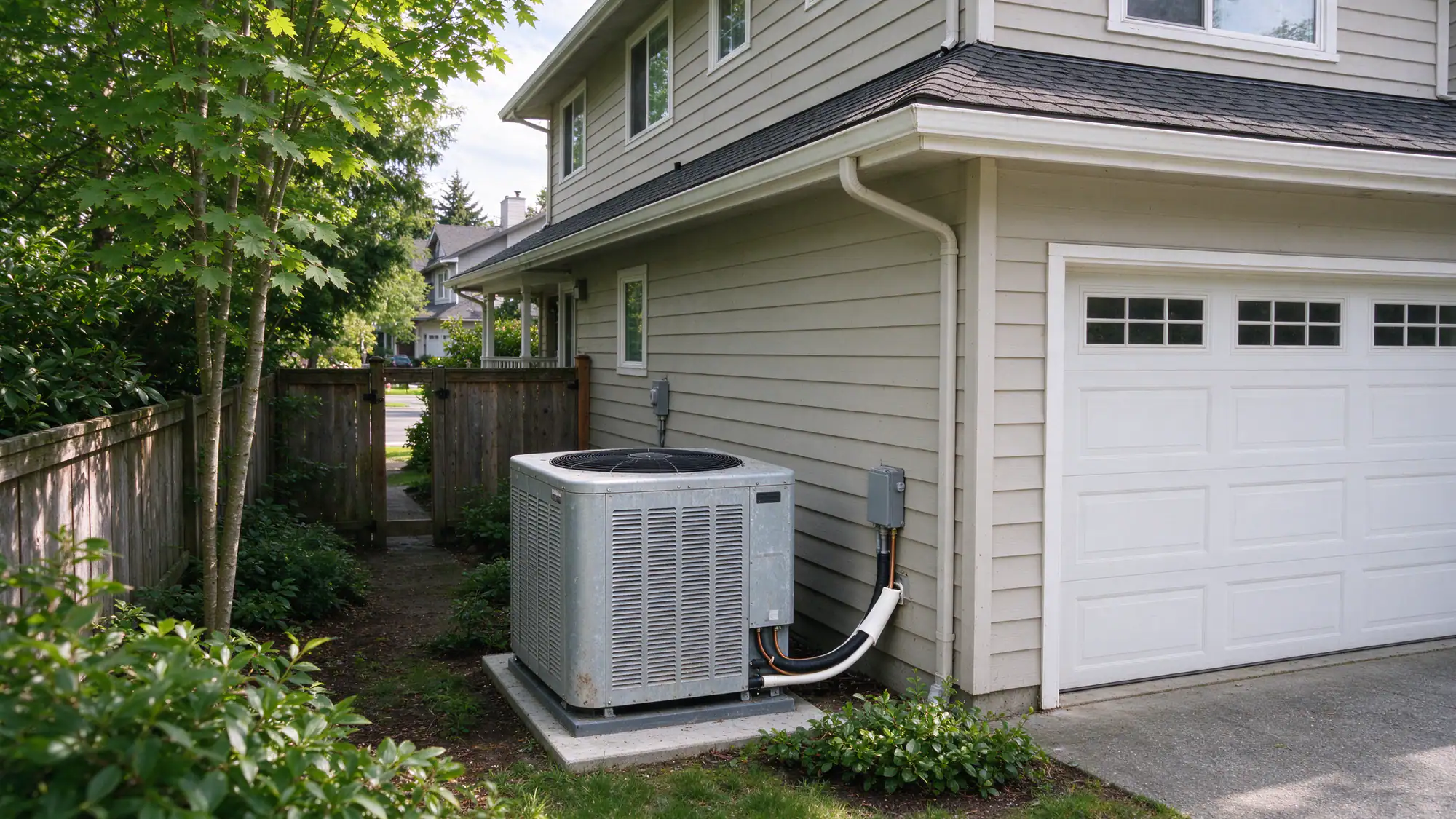
A heat pump in Kirkland or Redmond is a different calculation from the same system in Seattle, because Puget Sound Energy sells the electricity and charges far more for it than City Light does. The Seattle Heat Pump Company plans and manages ducted heat pump projects across Juanita, Houghton, Rose Hill, Totem Lake, Education Hill, Overlake and Grass Lawn, with the work carried out by licensed and insured contractors.
For most owners here the real decision is between an all-electric heat pump and a dual fuel system that keeps the gas furnace for the coldest hours. In Redmond, a colder design temperature adds a second question: how much heating capacity the heat pump needs to hold at 17°F.
Why PSE rates change the advice
PSE’s average residential electric rate was about 20.6 cents per kWh, against 13.38 cents on City Light’s Seattle rate. PSE gas costs about $1.67 per therm. Put those together and a heat pump needs to average a coefficient of performance of about 3.4 to beat a 95% efficient gas furnace on energy cost. Inside Seattle the same break-even sits at about 2.2.
A modern variable-speed heat pump reaches a COP of 3.4 or better in mild weather, in the 40s and 50s, and falls below it as the temperature drops toward freezing. That is why a dual fuel heat pump earns serious consideration on the Eastside. The heat pump carries the house through most of the season, including all the cooling, and the furnace takes over below a changeover temperature set to your rates. If the furnace is old or you want off gas entirely, an all-electric system still works; it simply saves less on heating than it would in Seattle.
PSE has asked regulators for further increases of 17.75% on electricity and 12.93% on gas. Those requests have not been approved, so the comparison here uses current rates. The heat pump versus gas furnace guide runs the numbers for both utilities.
Redmond’s 17°F design day
Seattle’s energy code lists outdoor design temperatures by location: 24°F for Seattle and Bellevue, 17°F for Redmond. The design temperature is the cold point the heating system is sized to meet, so a Redmond house loses noticeably more heat on its design day than the same house in Seattle.
Heat pump capacity moves the other way. As outdoor air gets colder, a heat pump delivers less heat while the house needs more. The temperature where those two lines cross is the balance point, and below it the difference comes from backup heat or a furnace. A cold-climate heat pump keeps more of its rated capacity at low temperatures, which pushes the balance point down. In Redmond, the choice between a standard and a cold-climate model is a real design decision, made from the load calculation rather than the marketing label. The Seattle winter performance guide explains how capacity falls with temperature, and variable-speed versus single-stage equipment covers why modulation matters at the low end.
Kirkland does not have its own entry in that table. Its neighbors Bellevue and Redmond sit at 24°F and 17°F, so the load calculation confirms which design condition applies for a given address rather than borrowing Seattle’s.
Size it for your winter, not Seattle'sA load calculation at your design temperature shows whether a standard heat pump is enough.
Get an EstimateWhat the housing looks like
The two cities were built in different decades. Kirkland’s largest single decade of construction is the 1970s, about 22.6% of homes, while Redmond’s is the 2010s, about 22.1%, according to Census estimates. Fewer than 3% of homes in either city predate 1940. About 48.5% of Kirkland households and 38.3% of Redmond households heat with utility gas; oil is rare, under 1% in both.
Where a 1970s house has a gas furnace and ducts, adding a heat pump is usually a furnace to heat pump conversion or a dual fuel retrofit on the existing ducts, after a static pressure test confirms the ducts can move the extra air. Where a newer house already has a heat pump or central air, the job is more often a heat pump replacement. Since January 1, 2026, Washington has required newly installed residential heat pumps to use refrigerants with a global warming potential under 750, which rules out R-410A and means the indoor coil is usually replaced along with the outdoor unit.
PSE incentives and the Trade Ally rule
Kirkland and Redmond are in PSE territory for both electricity and gas, so City Light’s discounts do not apply, and PSE’s do:
- Adding a heat pump to a gas furnace (a hybrid system): $1,500, or $2,400 with PSE’s income-based Efficiency Boost, for customers who buy both gas and electricity from PSE.
- Replacing electric resistance heat with a heat pump: $1,500, or $2,400 income-based, for PSE electric customers.
- Income-qualified gas customers switching to a heat pump: $4,000.
Since April 2, 2026, PSE requires these installations to be done by a PSE Trade Ally. The federal 25C tax credit ended for equipment placed in service after December 31, 2025. The PSE rebate guide tracks the details.
Permits and siting
Kirkland and Redmond each issue their own electrical permits and building permits, so the steps differ from Seattle’s and from each other. Each city also sets its own noise rules for outdoor equipment; the design checks the applicable limit for the lot instead of assuming Seattle’s. After installation, commissioning verifies airflow, refrigerant charge, defrost, the backup heat or furnace changeover setting, and the thermostat staging.
Bellevue to the south shares the PSE economics and a 24°F design temperature. Shoreline and Lake Forest Park across the north end of the lake and Northeast Seattle to the west buy power from City Light, where the break-even sits much lower.
Around Kirkland & Redmond
Neighborhoods
- Juanita
- Houghton
- Rose Hill
- Totem Lake
- Education Hill
- Overlake
- Grass Lawn
- Juanita Beach Park
- Marymoor Park
- Kirkland waterfront
- Bridle Trails State Park
- I-405
- SR 520
- SR 202
- NE 85th St
- 124th Ave NE
- Puget Sound Energy (electric and gas)
- City of Kirkland / City of Redmond (building and electrical permits)
Services in Kirkland & Redmond
Kirkland & Redmond heat pump questions
How much does a heat pump cost in Kirkland or Redmond?
There is no separate Eastside price band. A ducted heat pump on usable ducts typically runs about $6,700 to $20,000 in the Seattle area, and a like-for-like replacement about $6,700 to $15,000. Cold-climate equipment and a dual fuel setup change the scope, so they are priced from the design, not a flat add-on.
Should I keep my gas furnace as backup in Kirkland or Redmond?
Often it is worth considering here. On PSE's current electric rate, a heat pump needs to average a coefficient of performance of about 3.4 to beat a 95% efficient gas furnace on energy cost. A dual fuel system runs the heat pump in mild weather and switches to gas below a set outdoor temperature, which suits a furnace with years left.
Do I need a cold-climate heat pump in Redmond?
Not always, but Redmond's design temperature is 17°F, seven degrees colder than Seattle's 24°F. The heat pump has to carry the house's heat loss at that colder point, or the design has to plan for backup. Cold-climate models hold more capacity below freezing, and the load calculation shows whether a standard unit is enough.
Which PSE rebates apply to a heat pump in Kirkland or Redmond?
PSE offers $1,500 for adding a heat pump to a gas furnace when you buy both gas and electricity from PSE, $1,500 for replacing electric resistance heat, with $2,400 income-based amounts for both, and $4,000 for income-qualified gas customers who switch. A PSE Trade Ally has to do the installation.
Who issues heat pump permits in Kirkland and Redmond?
Each city issues its own building and electrical permits, so the permit steps and fees differ from Seattle's and from each other. The noise limits that decide where the outdoor unit can sit are also set by each city, and they are checked during design rather than assumed from Seattle's rules.
Related guides
Nearby service areas
Plan a heat pump for your Kirkland or Redmond houseTell us about the house and the system you have now.
Get an Estimate